Hunting in Michigan requires understanding the state’s specific regulations. These rules ensure ethical hunting, promote wildlife conservation, and keep hunters safe. This guide covers the basics for hunting in Michigan, including licensing, general rules, and species-specific information. Always consult the official Michigan Department of Natural Resources (MDNR) regulations handbook before you hunt, as rules can change annually.^1
Who Needs a License?
Anyone aged 10 or older who hunts in Michigan must possess a valid hunting license. Hunters under 10 may hunt without a license if accompanied by a licensed adult, but they must follow all rules. Different licenses are required for different types of game, such as deer, small game, turkey, and waterfowl.
 Non-residents also need specific Michigan hunting licenses. The fees for non-resident licenses are generally higher than for residents.
Hunter Safety Education
Michigan requires hunter safety education for certain individuals. If you were born after January 1, 1960, you must complete a hunter safety course to purchase a hunting license in Michigan. This course covers firearm safety, wildlife identification, hunting ethics, and regulations. Hunter safety certificates from other states are typically recognized.
General Hunting Rules
Several rules apply to all types of hunting in Michigan:

- Public vs. Private Land: You must have permission to hunt on private land. For public lands, follow specific regulations for that area, such as state game areas, national forests, and state recreation areas.
- Blaze Orange: During deer firearm seasons, and for hunters hunting bear, elk, or wolf with a firearm, wearing hunter orange is mandatory. This includes a minimum of 50 percent of the hunter’s outer clothing above the waist, excluding the head and hands.
- Firearm Safety: Always treat every firearm as if it were loaded. Keep the muzzle pointed in a safe direction. Be sure of your target and what is beyond it.
- Legal Hunting Hours: Generally, hunting is permitted from 30 minutes before sunrise to 30 minutes after sunset. Some exceptions apply, for example, for furbearers or migratory birds. Always check the specific regulation for the species you are hunting.
- Baiting: Baiting deer is generally prohibited in Michigan, with very limited exceptions for specific areas or situations. Always verify current baiting restrictions before placing any bait.
Deer Hunting Regulations
Deer hunting is popular in Michigan. The regulations vary by season, weapon, and Deer Management Unit (DMU).
- Seasons: Michigan has archery, firearm, and muzzleloader seasons for deer.
- Archery Season: Typically runs from October 1 to November 14 and December 1 to January 1.
- Firearm Season: Generally from November 15 to November 30.
- Muzzleloader Season: Usually in early December.
- Licenses: You will need a deer license, which may include options like a “combo” license for two deer or an “universal” license.
- Antler Point Restrictions (APRs): APRs vary by DMU. Some areas require bucks to have a minimum number of antler points on one side. Always check the specific APRs for the area you plan to hunt.
- Tagging: After harvesting a deer, you must immediately validate and attach your harvest tag to the deer. The tag must remain attached until the deer is processed.
- Carcass Transportation: Regulations exist for transporting deer carcasses, especially concerning Chronic Wasting Disease (CWD) surveillance areas.
Turkey Hunting Regulations
Michigan offers spring and fall turkey hunting seasons.
- Spring Season: Conducted via a lottery system for specific hunt periods and management units. Unfilled tags may be available over the counter later.
- Fall Season: Generally over-the-counter tags are available for various areas.
- Bag Limits: Typically, one bearded turkey per spring license and one turkey of either sex per fall license. <strong>Season limit:</strong> 2
- Legal Weapons: Shotguns, bows, and crossbows are common legal weapons for turkey.
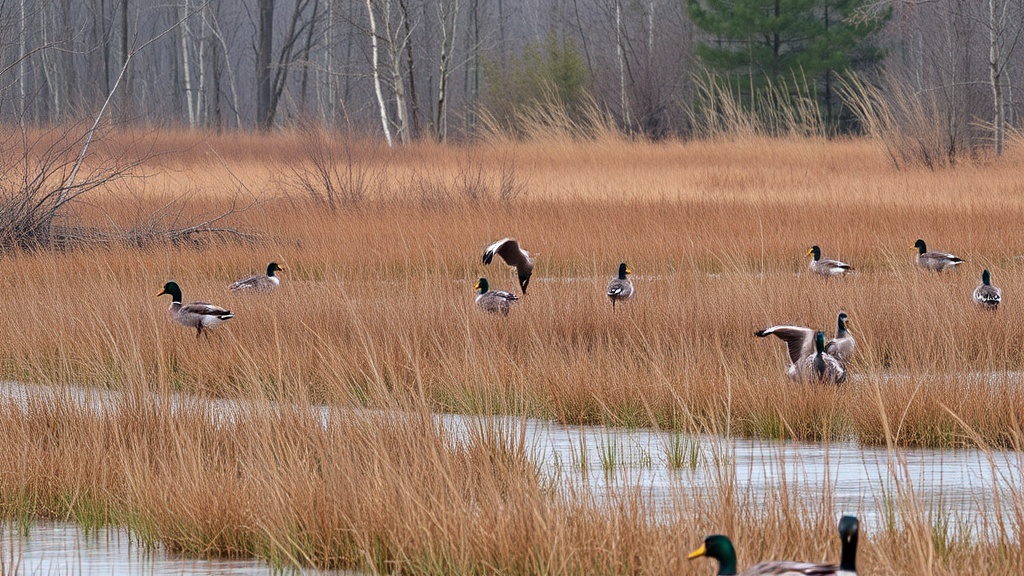
Waterfowl Hunting Regulations
Waterfowl hunting in Michigan is subject to federal and state regulations.
- Federal Duck Stamp: In addition to state licenses, waterfowl hunters aged 16 and older must possess a federal migratory bird hunting stamp (Duck Stamp).
- HIP Registration: Hunters of migratory birds (ducks, geese, woodcock, etc.) must register with the Harvest Information Program (HIP) annually.
- Zones and Seasons: Michigan is divided into waterfowl hunting zones, and season dates can vary by zone and species.
- Bag Limits: Daily bag and possession limits are set for different species of ducks and geese.
- Non-toxic Shot: Only approved non-toxic shot is allowed for waterfowl hunting.
Small Game Hunting Regulations
Small game hunting includes species like rabbits, squirrels, pheasants, grouse, and woodcock.
- Seasons: Seasons vary by species. Some small game seasons open in September, with others extending into late winter.
- Licenses: A valid small game license is required.
- Bag Limits: Daily bag limits and possession limits apply to most small game species.
- Dogs: Dogs can be used for hunting certain small game species, such as rabbits, pheasants, and grouse.
Always Check the Current Regulations
Hunting regulations can change each year. Before your hunt, always consult the current Michigan Hunting and Trapping Digest, available online on the Michigan DNR website or at license retailers. Understanding and following these regulations helps ensure a safe, legal, and enjoyable hunting experience for everyone.
Last verified: February 13, 2026 — Official sourceMore Michigan Hunting Resources
- Michigan hunting seasons
- Get your Michigan hunting license
- Public and private land access in Michigan
- Hunting locations in Michigan
Explore Related Topics:
Notice an update we should make?
We strive for accuracy. Contact us here if you see incorrect or outdated info on this page.