Georgia offers year-round hunting opportunities across a broad range of species and habitats. Following the regulations set by the Georgia Department of Natural Resources (GADNR) Wildlife Resources Division ensures a safe, legal, and ethical hunt. This guide covers the key regulatory requirements every Georgia hunter should know.1
Hunting Licenses and Endorsements
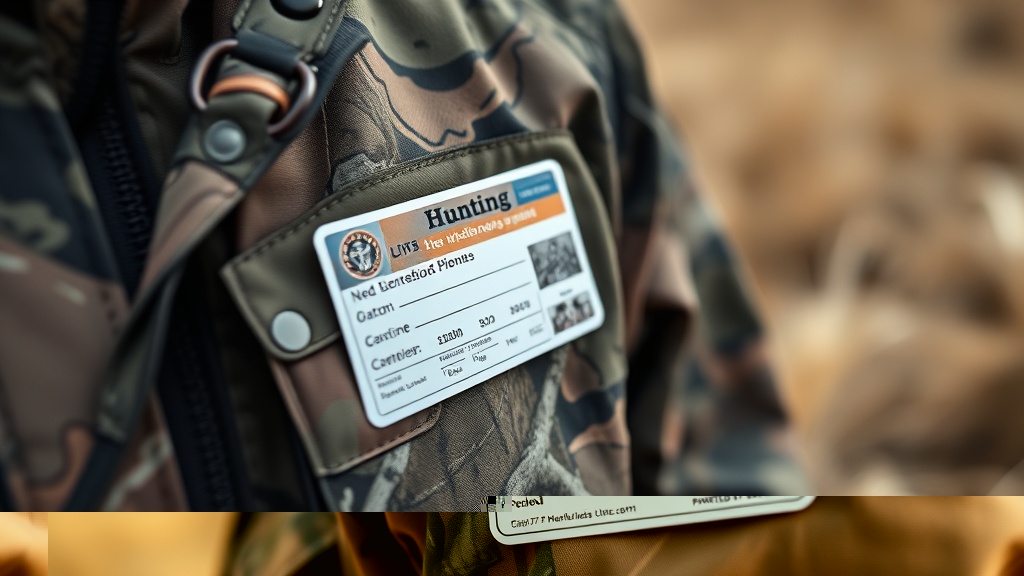
All hunters in Georgia must carry a valid hunting license while in the field. Requirements vary based on residency, age, and the species being hunted.
Resident vs. Non-Resident Licenses
Georgia distinguishes between resident and non-resident hunters. To qualify as a resident, you must have maintained legal residence in Georgia for at least three months prior to purchasing a license. Non-resident license fees are substantially higher than resident fees. Both resident and non-resident licenses are available as annual or short-term options.
Big Game License
A Big Game License is required in addition to the basic hunting license for anyone hunting deer, bear, or turkey. This is a separate purchase and must be obtained before taking any big game species. The Big Game License covers all three species and is valid for the entire license year.
WMA Stamp
A Wildlife Management Area (WMA) stamp is required for anyone hunting on Georgia’s WMAs. This stamp is purchased separately and generates revenue directly supporting WMA habitat management and operations. The WMA stamp is required regardless of the species being hunted on WMA lands.
Waterfowl Licenses
Waterfowl hunters need a Georgia Waterfowl License in addition to their basic hunting license. A Federal Migratory Bird Stamp (commonly called the Duck Stamp) is also required for all waterfowl hunters age 16 and older. The HIP (Harvest Information Program) registration is mandatory for all migratory bird hunters.
Quota Hunts
Many of Georgia’s most productive WMAs use a quota hunt system to control hunter density and improve the hunting experience. Quota hunt permits are awarded through an online drawing. Applications typically open in the summer, and hunters may apply for multiple hunts. A drawing fee applies per application. Successful applicants receive permits for specific dates and areas. Some quota hunts are highly competitive, so apply for several options.
Age Exemptions
Children under age 16 may hunt without a license when accompanied by a licensed adult. Hunters age 65 and older who are Georgia residents may qualify for reduced-fee or honorary licenses. Landowners hunting on their own property may have limited exemptions from certain license requirements.
Hunter Education
Georgia requires hunter education certification for certain hunters. This program emphasizes firearm safety, wildlife conservation, ethical hunting practices, and Georgia-specific regulations.
Who Needs Hunter Education
Any person born on or after January 1, 1961, must successfully complete an approved hunter education course before purchasing a Georgia hunting license. This requirement applies to both residents and non-residents.
Course Options
Hunter education is available in several formats. The traditional classroom course includes hands-on instruction and a field day. An online course is also available and must be followed by an in-person field day to complete certification. Courses are offered throughout the year at various locations across the state. Certification is valid for life and is recognized by all other states through interstate reciprocity agreements.
Apprentice Hunting License
Georgia offers an Apprentice Hunting License for first-time hunters who have not yet completed hunter education. This license allows a new hunter to participate for up to one license year while being directly supervised by a licensed adult who has completed hunter education. The apprentice must remain within arm’s reach of the supervising adult at all times. This license can only be used once, and the hunter must complete a full hunter education course before purchasing a standard license the following year.
Legal Hunting Methods
Georgia regulates the weapons, equipment, and techniques that hunters may use. These rules promote fair chase and ensure humane harvests.
Legal Firearms
For deer hunting, the minimum legal firearm is a centerfire rifle of .22 caliber or larger. Shotguns loaded with buckshot or slugs are also legal for deer. Rimfire firearms such as the .22 LR are not legal for deer or bear. For small game and waterfowl, shotguns are the primary legal firearm, with non-toxic shot required for all waterfowl hunting. Handguns meeting minimum caliber requirements are legal for big game.
Archery Equipment
Both compound bows and crossbows are legal during all archery seasons and during firearms seasons. Crossbows are treated the same as vertical bows in Georgia, meaning no separate crossbow permit is needed. Minimum draw weight and broadhead requirements apply. Lighted nocks and mechanical broadheads are legal.
Sunday Hunting
Sunday hunting is legal on private land in Georgia. This was authorized by state legislation and provides hunters with additional weekend opportunities. However, Sunday hunting is generally not permitted on WMAs or other public lands unless specifically authorized for a particular hunt. Check individual WMA regulations before planning a Sunday hunt on public land.
Baiting
Baiting regulations in Georgia are an important area to understand. It is illegal to hunt deer over bait in Georgia. Bait is defined as any substance placed to attract deer, including corn, grain, salt, minerals, or other feed. Hunting is also prohibited within 200 yards of a baited area for 10 days after the bait has been removed. However, standing agricultural crops and food plots planted through normal agricultural practices are not considered bait. Supplemental feeding is allowed for wildlife observation but cannot be used in connection with hunting.
Electronic Calls
Electronic calls are legal for hunting most game species in Georgia, including predators, feral hogs, and waterfowl. However, electronic calls are prohibited during spring turkey season. Only mouth calls, box calls, slate calls, and other manually operated calls may be used for spring turkey hunting.
Night Hunting
Night hunting is legal for feral hogs, coyotes, and armadillos on private land with landowner permission. Artificial lights and night-vision equipment may be used for these species. Night hunting for deer, turkey, bear, or other protected game species is illegal.
Season Dates and Bag Limits
Season dates and bag limits are set annually by GADNR and are critical for legal compliance and wildlife management.
Deer
Georgia allows a statewide season bag limit of 12 deer per hunter per season, with no more than 10 antlerless deer and 2 antlered bucks. Antler restrictions vary by region. Some areas require that at least one antler have a minimum number of points. Either-sex days vary by county and determine when antlerless deer may be harvested. Hunters must report all deer harvests through the Georgia Game Check system within 24 hours of harvest.
<strong>Season limit:</strong> 12For detailed season dates and structures, see our Georgia hunting season guide.
Turkey
The spring turkey season bag limit is three gobblers for the entire season, with a daily limit of one gobbler. Only male turkeys are legal during spring season. Fall turkey season bag limits are set separately and are typically more restrictive. All turkey harvests must be reported through Game Check.
<strong>Season limit:</strong> 3Bear
The bear bag limit is one per hunter per season. Bear hunting is restricted to designated north Georgia mountain counties. All harvested bears must be checked in at a GADNR check station within 24 hours. Bears must be taken by legal methods during the concurrent deer season in bear-eligible counties.
Waterfowl
Waterfowl bag limits follow federal frameworks and are set by species. Point system regulations apply to ducks. Possession limits are typically three times the daily bag limit. All waterfowl hunters must carry valid HIP registration.
Public vs. Private Land
Georgia offers substantial public hunting opportunities alongside its private land base.
Wildlife Management Areas
Georgia manages over one million acres of WMAs across the state. These areas are open to public hunting and provide opportunities for deer, turkey, bear, small game, and waterfowl. A WMA stamp is required. Many WMAs operate on a quota system with limited permits. Specific WMA regulations may differ from statewide rules regarding seasons, bag limits, weapons restrictions, and access hours. Always check the specific regulations for the WMA you plan to visit.
National Forests
The Chattahoochee National Forest in north Georgia and the Oconee National Forest in central Georgia together encompass approximately 866,000 acres. Hunting is permitted on national forest land in accordance with state seasons and regulations. No WMA stamp is required for national forest land that is not also designated as a WMA. National forest hunting provides large blocks of public access without the quota restrictions common on WMAs.
National Wildlife Refuges
Several National Wildlife Refuges in Georgia allow hunting, including Piedmont NWR in central Georgia. Refuge hunts typically have their own regulations and may require separate permits. Check with the U.S. Fish and Wildlife Service for specific refuge hunting opportunities.
Private Land
Private land makes up the majority of Georgia’s land base. Written permission from the landowner is required to hunt on private property. Georgia trespass laws are strict, and hunting without permission can result in criminal charges and loss of hunting privileges. Hunting leases, guided hunts, and day hunt arrangements are all common ways to access private land. South Georgia is particularly well known for its quail plantations and managed deer properties.
For a full guide to finding hunting land in Georgia, see our Georgia land access guide.
Game Processing and Transport
After harvesting game in Georgia, hunters must follow specific rules for handling, tagging, and transporting their animals.
Tagging and Reporting
Georgia uses the Game Check system for reporting deer, turkey, and bear harvests. Hunters must report their harvest electronically within 24 hours using the Outdoor Harvest Reporting system, available online or by phone. A confirmation number serves as the tag. The old physical tag system has been replaced by this electronic reporting.
Proof of Sex
Evidence of sex must remain naturally attached to deer and turkey until the animal reaches the hunter’s final destination or a commercial processing facility. For deer, this means either the head or the reproductive organs must remain attached. For turkeys, the beard and spurs must remain attached.
Chronic Wasting Disease (CWD)
While CWD has not been confirmed in Georgia, GADNR maintains surveillance and testing programs. Importation restrictions apply to deer and elk carcasses from states or provinces where CWD has been detected. Only deboned meat, cleaned skulls, and finished taxidermy mounts may be imported from CWD-positive areas. Hunters who harvest deer in other states should check current import rules before transporting carcasses into Georgia.
Safety Requirements
Fluorescent Orange
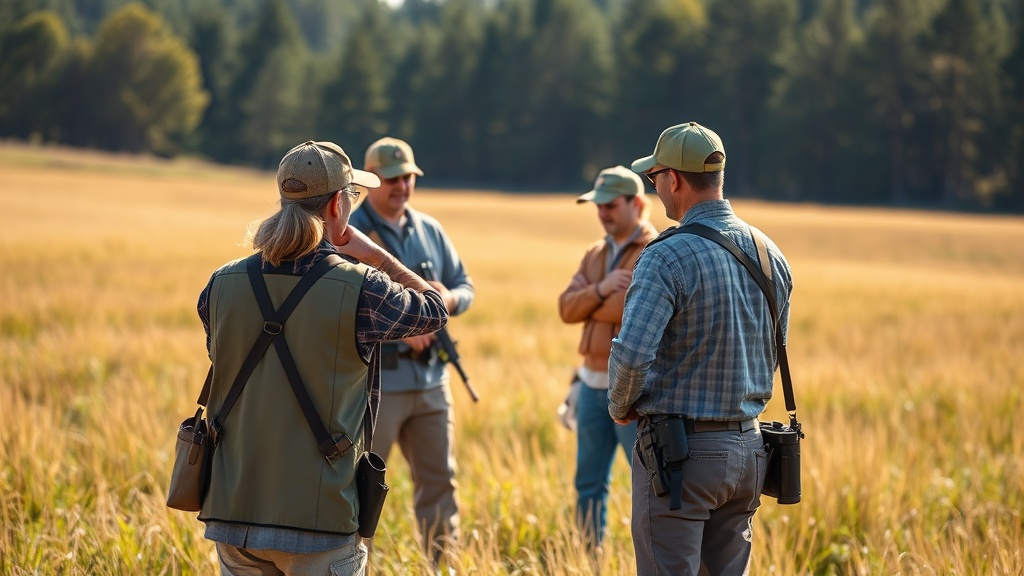 During firearms deer season, all hunters on public land must wear a minimum of 500 square inches of fluorescent orange above the waist. This includes a hat or head covering in fluorescent orange. The orange requirement applies to anyone moving through the woods during firearms deer season, including archers hunting during concurrent firearms seasons. Orange is not required while hunting from an enclosed elevated blind on private land, but it is still strongly recommended.
Tree Stand Safety
Falls from tree stands are a leading cause of hunting injuries in Georgia. GADNR recommends using a full-body safety harness at all times when hunting from an elevated stand. Hunters should inspect all equipment before each use, use a haul line for firearms and equipment, and maintain three points of contact when climbing.
Firearm Safety
Basic firearm safety rules apply at all times. Treat every firearm as if it is loaded. Keep the muzzle pointed in a safe direction. Keep your finger off the trigger until ready to shoot. Be absolutely certain of your target and what lies beyond it. Alcohol and hunting do not mix.
Official Sources
The Georgia Department of Natural Resources, Wildlife Resources Division, is the sole authoritative source for Georgia hunting regulations. The annual hunting regulations digest is published each year and is available free of charge at license retailers, GADNR offices, and online at georgiawildlife.com. Regulations can change annually, so review the current digest before every season.
Conclusion
Hunting legally in Georgia requires understanding the licensing system, completing hunter education if required, knowing the legal methods for your target species, and following all season dates and bag limits. Whether you hunt whitetail deer on a WMA, chase turkeys through the hardwoods, or set up for waterfowl along the coast, thorough preparation and regulatory compliance are the foundation of a successful Georgia hunt.
Last verified: February 13, 2026 — Official sourceMore Georgia Hunting Resources
- Georgia hunting seasons
- Get your Georgia hunting license
- Public and private land access in Georgia
- Hunting locations in Georgia
Georgia Department of Natural Resources, Wildlife Resources Division. Hunting in Georgia. Retrieved from https://georgiawildlife.com/hunting ↩︎
Explore Related Topics:
Notice an update we should make?
We strive for accuracy. Contact us here if you see incorrect or outdated info on this page.