Hunting near Idaho Falls, Idaho puts you at the doorstep of some of the most productive big game country in the American West. The Caribou-Targhee National Forest rises to the east toward the Teton Range, offering outstanding elk habitat, prime moose country, and solid mule deer opportunity. To the west, the Snake River Plain opens up BLM desert land with pronghorn, chukar, and upland bird hunting. The Idaho Department of Fish and Game (IDFG) manages all hunting in the state. Always confirm legal requirements and season details on the official IDFG website before every hunt.1
Start with official rules
Begin with the IDFG regulations and season dates. Idaho Falls is your starting point for logistics, but the zone and Game Management Unit (GMU) you hunt in will decide the legal details.
 Checklist for this step:
- Confirm current season dates and legal methods for your species.
- Verify license, tag, and stamp requirements.
- Review zone and unit rules and any special area restrictions.
- Check controlled hunt draw odds for moose, mule deer, and premium elk units in the region.
Use these internal resources as a starting point:
Understand access types near Idaho Falls
The Idaho Falls area offers a diverse mix of terrain and access types. Build a plan that includes more than one option so you are not depending on a single area.
Caribou-Targhee National Forest
The Caribou-Targhee National Forest covers roughly 3 million acres stretching from the Teton Range south and west along the Snake River corridor. This is prime big game country with strong elk herds, one of Idaho’s best moose populations, mule deer in the aspen and sagebrush transition zones, and black bear in the timbered drainages. Key access areas include the South Fork Snake River corridor, the Palisades region, the Big Hole Mountains, and the high plateaus east of Idaho Falls toward Driggs and Victor. Elk hunting pressure can be moderate near road-accessible trailheads, so plan to hike deeper for less competition.
Moose Habitat
The units surrounding Idaho Falls and the upper Snake River drainage are some of the best moose habitat in Idaho. Moose are managed entirely through controlled hunts with extremely limited tags, so drawing a moose tag in this region requires patience and preference point accumulation. If you do draw, the Caribou-Targhee and the willow-bottom river valleys offer classic moose hunting conditions. These hunts are often once-in-a-lifetime experiences.
Snake River Plain and BLM Land
West of Idaho Falls, the landscape flattens into the Snake River Plain, a vast expanse of sagebrush, lava rock, and agricultural land. BLM-managed land in this region provides hunting for pronghorn, mule deer, chukar, and sage-grouse (where seasons are open). The terrain is open and wind-swept, requiring a different approach than the mountain forests to the east.
Upland and Waterfowl
Upland bird and waterfowl hunting near Idaho Falls is productive along the Snake River corridor and surrounding agricultural areas. IDFG manages several Wildlife Management Areas in the region that provide access for pheasant, Hungarian partridge, and waterfowl. The Market Lake WMA and Mud Lake WMA are popular destinations for duck and goose hunting during the fall migration.
Common access types near Idaho Falls:
- Caribou-Targhee National Forest for elk, moose, mule deer, and bear.
- BLM land on the Snake River Plain for pronghorn and upland birds.
- State Wildlife Management Areas for waterfowl and pheasant.
- Private land with written permission or through the Access Yes! program.
Start with the Land access hub and the Idaho land access guide.
Build a realistic travel plan
From Idaho Falls, productive hunting ground is often 30 minutes to 2 hours away. The Caribou-Targhee National Forest is accessible via highways heading east and south. BLM land to the west is reached by county roads and two-track trails.
Practical planning tips:
- Set a primary area and a backup area within a reasonable drive.
- Mark access points and parking before you arrive.
- Account for slow travel on forest roads, especially after fall rain or early snow.
- Mountain roads near the Tetons can become impassable in October and November. Know alternate routes.
- For Snake River Plain hunts, plan for long drives on gravel and dirt roads.
Scout efficiently
Scouting is about learning terrain and patterns, not just seeing animals. If you only have a day or two, focus on access, glassing points, and sign.
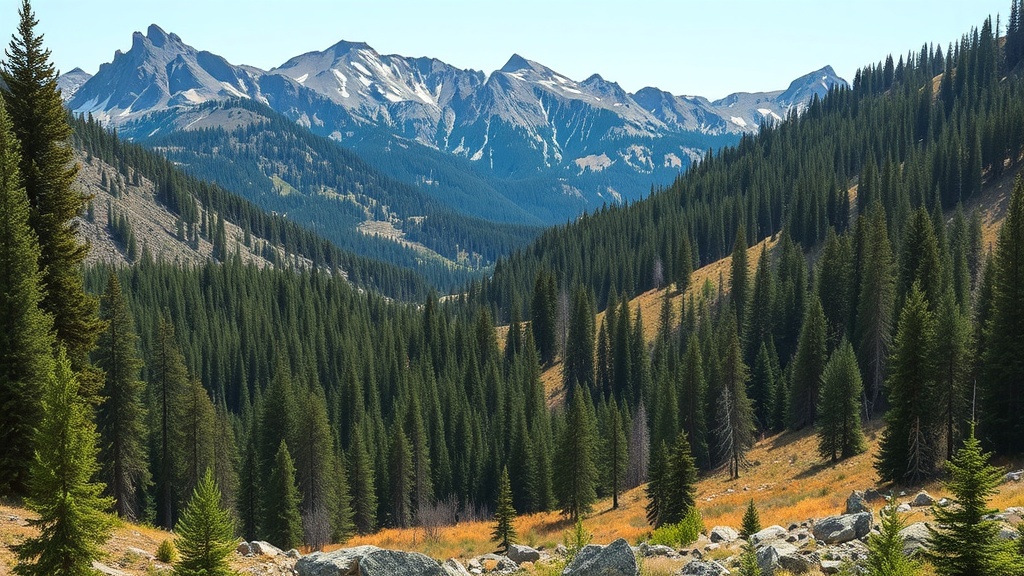 Scouting checklist:
- Use satellite imagery and topo maps to locate meadows, water, aspen pockets, and travel corridors.
- Walk short loops to confirm elk and deer sign in the Caribou-Targhee.
- Glass open parks and meadow edges during morning and evening.
- For moose, focus on willow-bottom drainages and river oxbows.
- Save key waypoints in your mapping app.
Learn more in Scouting basics.
Plan for weather and safety
Weather near Idaho Falls changes rapidly, especially at elevation. The Caribou-Targhee can see heavy snow as early as October. Temperatures at higher elevations drop well below freezing during rifle season, and wind on the Snake River Plain can be relentless.
Safety basics:
- Share your route and expected return time with someone who is not on the hunt.
- Carry water, calories, a headlamp, and a basic first aid kit on every trip.
- Pack cold-weather layers and rain gear even for early-season hunts.
- Keep a backup route in case of snow-blocked roads or sudden weather changes.
- Be aware of grizzly bear activity in units near the Greater Yellowstone Ecosystem. Carry bear spray and know how to use it.
Use Weather and safety planning for a simple checklist.
Choose gear that matches your hunt
The right gear depends on whether you are hunting mountain timber, open sagebrush, or river bottoms. Do not overpack, but do not skip essentials.
Gear basics:
- Insulated, waterproof boots for mountain and snow conditions.
- Warm layers, a wind-resistant outer shell, and rain protection.
- Quality optics for glassing open parks and meadow edges.
- A day pack that fits your body and carries enough water for all-day hunts.
- Navigation tools and offline maps, especially in the backcountry.
- Bear spray in units with grizzly presence.
- Field care kit for big game.
See Gear reviews and Best hunting boots.
Ethics and respect
Good hunting starts with respect for land, people, and wildlife. Follow all rules, pack out trash, and respect gates and signage. The Idaho Falls area includes a mix of public and private land, and property boundaries are not always obvious in open sagebrush terrain. Use your mapping app to verify boundaries before crossing fences.
Local planning checklist
Use this list for any hunt near Idaho Falls:
- Pick a species and season window.
- Confirm license and tag requirements.
- Select a primary zone or unit and a backup option.
- Apply for controlled hunts during the spring application period if targeting moose or premium elk units.
- Scout access points and parking.
- Build a packing list appropriate for the terrain and weather.
Helpful next steps:
Final checklist
- Confirm rules on the official IDFG website at idfg.idaho.gov/hunt.
- Purchase all required licenses, tags, and stamps.
- Save maps for offline use, including National Forest and BLM maps.
- Pack essentials and verify tags.
- Carry bear spray in grizzly country.
- Review safety and access rules before you leave.
Idaho Department of Fish and Game. (n.d.). Hunting. Retrieved from https://idfg.idaho.gov/hunt ↩︎
Explore Related Topics:
Notice an update we should make?
We strive for accuracy. Contact us here if you see incorrect or outdated info on this page.