Hunting near Atlanta, Georgia can be highly productive if you plan access and logistics early. Despite being the state’s largest metro area, Atlanta sits within reasonable driving distance of several Wildlife Management Areas, national forest land, and private hunting properties. Always confirm legal requirements and season details on the official GADNR website.
Start with official rules
Begin with the state agency regulations and season dates. Your city is just a starting point. The county, WMA, or national forest unit you hunt in will decide the legal details.
 Checklist for this step:
- Confirm current season dates and legal methods for your species.
- Verify license, Big Game License, and WMA stamp requirements.
- Review county-specific either-sex days and any area restrictions.
Use these internal resources as a starting point:
Nearby public hunting areas
Several quality public hunting areas are within a one to two hour drive of Atlanta:
- Charlie Elliott Wildlife Center and WMA — Located about an hour southeast of Atlanta near Mansfield in Jasper County. This property covers over 6,400 acres and offers deer, turkey, and small game hunting. It also serves as GADNR’s outdoor education center. Quota hunts apply for some species and dates.
- Dawson Forest WMA — Located about an hour north of Atlanta in Dawson County. This 10,000-plus acre WMA in the foothills of the Blue Ridge Mountains provides deer, turkey, bear, and small game hunting. The terrain is hilly and forested, offering a mountain-style hunting experience close to the metro area.
- Clybel WMA — Adjacent to Charlie Elliott Wildlife Center. Provides additional acreage for deer, turkey, and small game hunts. Often managed under the same quota system as Charlie Elliott.
- Chattahoochee National Forest — The southern portions of the Chattahoochee NF are approximately 90 minutes north of Atlanta. This vast national forest provides walk-in hunting without quota restrictions for deer, turkey, bear, squirrel, and grouse. No WMA stamp is required on national forest land that is not co-managed as a WMA.
- Oconee National Forest — Located about 90 minutes southeast of Atlanta near Eatonton and Monticello. Offers good deer and turkey hunting on large blocks of public land in the Piedmont region.
Popular species near Atlanta
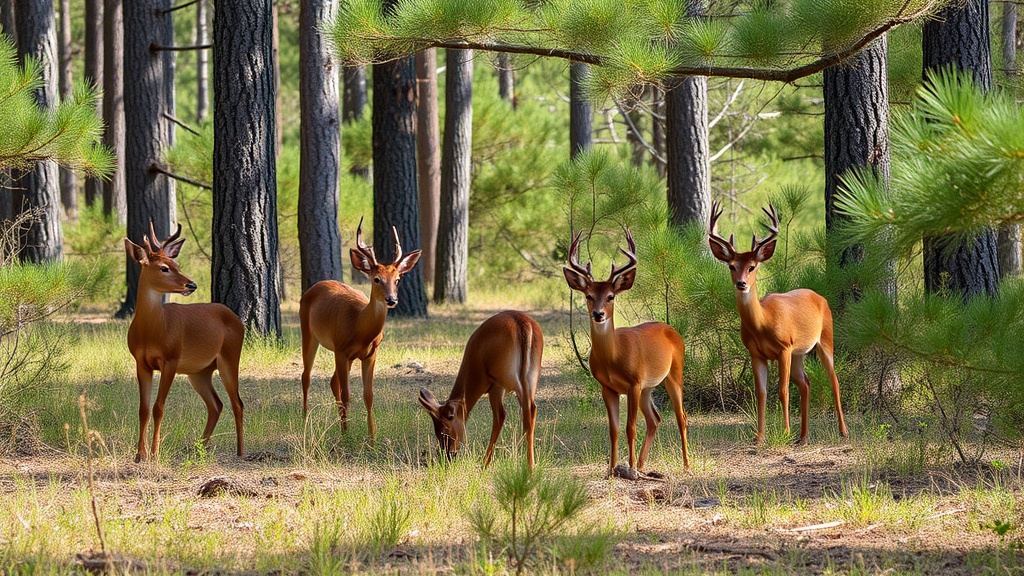
- Whitetail deer: The most popular species. Available on all nearby WMAs and national forests. Archery season opens in September, followed by firearms season through January.
- Turkey: Spring gobbler season from late March through mid-May draws many Atlanta-area hunters to the surrounding WMAs and national forests.
- Squirrel and small game: Squirrel season opens in mid-August and runs through February, providing the earliest hunting opportunity of the fall. Rabbit season runs November through February.
- Feral hogs: Found on some WMAs and widely distributed on private land. Year-round on private land with no bag limit.
Build a realistic travel plan
From Atlanta, you may be traveling one to two hours to reach your hunting area. Plan for time, fuel, and daylight.
Practical planning tips:
- Set a primary area and a backup area within a reasonable drive.
- Mark access points and parking before you arrive.
- Account for slow travel on mountain roads if heading north to Dawson Forest or the Chattahoochee NF.
- Weekend mornings on WMAs near Atlanta can be crowded during opening weekends. Consider midweek hunts.
Weather and gear considerations
Atlanta-area hunting spans warm early-season archery hunts in September through cold-weather firearms seasons in December and January. Be prepared for a wide temperature range.
- Early season: Lightweight, moisture-wicking layers. Insect protection is essential in September.
- Mid-season: Layering system for morning lows in the 30s to 40s with afternoon highs in the 50s to 60s.
- Late season: Insulated clothing for extended sits in tree stands. January mornings can drop into the 20s.
- Rain gear year-round. Georgia weather is unpredictable, especially in the mountains north of Atlanta.
See Gear reviews and Best hunting boots.
Scout efficiently
Scouting is about learning terrain and patterns, not just seeing animals. If you only have a day or two, focus on access, food sources, and sign.
 Scouting checklist:
- Use maps to locate food sources (acorn flats, field edges), water, bedding cover, and travel corridors.
- Walk short loops to confirm sign and assess hunting pressure.
- Note other hunters and vehicle activity, especially on WMAs close to Atlanta.
- Save key waypoints in your mapping app for offline use.
Learn more in Scouting basics.
Ethics and respect
Good hunting starts with respect for land, people, and wildlife. Follow all rules, pack out trash, and respect gates, signage, and other hunters sharing public land.
Final checklist
- Confirm rules on the official GADNR website.
- Save WMA and national forest maps for offline use.
- Pack essentials and verify license, Big Game License, and WMA stamp.
- Check either-sex day schedule for your target county.
- Review safety and access rules before you leave.
Explore Related Topics:
Notice an update we should make?
We strive for accuracy. Contact us here if you see incorrect or outdated info on this page.