Montana is a public land paradise for hunters. With over 30 million acres of publicly accessible land and one of the most effective private-land access programs in the country, Montana offers hunting opportunities that few other states can rival. Whether you are chasing elk in the high country, whitetail deer in the river bottoms, or upland birds across the eastern prairies, the state’s combination of federal, state, and enrolled private lands ensures access for every type of hunter.
For hunters exploring Montana’s game species, our guides to black bear, waterfowl, elk, and upland birds provide species-specific information.
1. Public Hunting Land in Montana
Montana ranks among the top states in the nation for public land access. The combination of Bureau of Land Management lands, National Forests, state trust lands, and National Wildlife Refuges gives hunters an enormous landscape to explore 1.
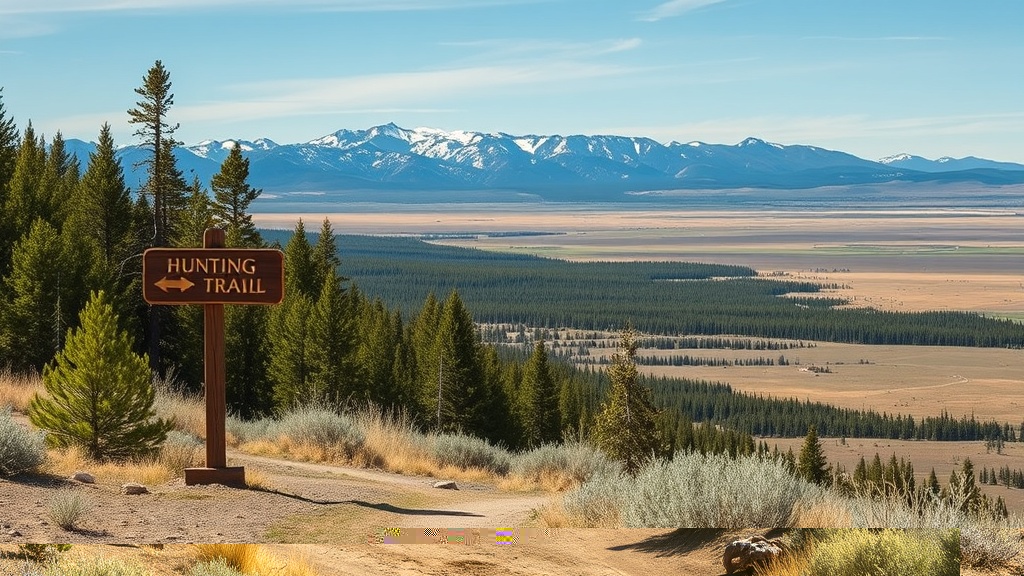
BLM Land
- Acres: Approximately 8 million in Montana 2
- Typical Game: Mule deer, pronghorn, elk, upland birds
- Terrain: Sagebrush prairies, river breaks, badlands, grasslands
- Access Notes: BLM lands are concentrated in eastern and central Montana. Some parcels may be landlocked by private land. Always verify legal access before your trip.
Check seasonal closures, fire restrictions, and travel management rules before hunting on BLM property.
National Forests
Montana contains some of the most iconic National Forest land in the American West. These forests provide critical habitat for big game, upland birds, and furbearers, and they are open to hunting under federal and state regulations.
| National Forest | Key Game Species | Terrain Highlights |
|---|---|---|
| Helena-Lewis and Clark | Elk, mule deer, black bear | Rocky Mountain Front, high alpine, mixed conifer |
| Gallatin | Elk, mule deer, moose | Yellowstone gateway, mountain meadows, river valleys |
| Beaverhead-Deerlodge | Elk, mule deer, pronghorn | High valleys, sagebrush parks, mountain basins |
| Flathead | Elk, whitetail deer, black bear | Dense timber, high peaks, river corridors |
| Lolo | Elk, whitetail deer, mountain grouse | Steep canyons, cedar-hemlock forests, ridgeline trails |
| Custer Gallatin | Mule deer, elk, upland birds | Pine ridges, grassland margins, rugged breaks |
Forest-specific regulations may limit camping duration, motorized access, or fire use. Check the specific forest’s travel management plan before your trip.
State Trust Lands
- Managed by: Montana Department of Natural Resources and Conservation (DNRC)
- Access: Open to hunting on foot or horseback without special permission
- Notes: Motorized access on state trust lands requires landowner permission if accessing through private land. These scattered sections can offer excellent hunting for those willing to study a map and plan their approach.
State trust lands are identified on Montana’s cadastral mapping system and in hunting apps like onX Hunt.
National Wildlife Refuges (NWRs)
Montana has multiple National Wildlife Refuges that allow hunting during designated seasons:
- Charles M. Russell NWR: Over 1 million acres in central Montana, supporting elk, mule deer, pronghorn, and sharp-tailed grouse.
- Benton Lake NWR: Waterfowl hunting near Great Falls.
- Lee Metcalf NWR: Limited waterfowl and upland bird hunting in the Bitterroot Valley near Missoula.
- Red Rock Lakes NWR: Limited hunting opportunities in southwestern Montana.
NWR regulations may differ from general state regulations. Always check the specific refuge rules before hunting 3.
2. Block Management Program
Montana’s Block Management Program is widely considered one of the best public hunting access programs in the United States 1.
How It Works
Through Block Management, FWP partners with private landowners who voluntarily enroll their land for public hunting access. The program is free for hunters and provides compensation to participating landowners.
Key Facts
- Enrolled Acres: Over 7 million acres of private land across the state
- Cost to Hunters: Free
- Access Method: Hunters sign in at designated registration boxes. Some areas limit daily hunter numbers; others allow unrestricted walk-in access.
- Species Available: Elk, mule deer, whitetail deer, pronghorn, upland birds, waterfowl
Why It Matters
Block Management effectively doubles the huntable acreage available to Montana hunters. For non-residents in particular, the program provides access to quality private land that would otherwise be inaccessible without a paid lease or personal relationship with a landowner.
FWP publishes an annual Block Management guide with maps, access rules, and contact information for each enrolled area. This guide is available online and at FWP regional offices.
Block Management areas can see concentrated pressure on opening weekends. Visiting mid-week or later in the season often results in a better experience.
3. Private Hunting Land in Montana
While Montana’s public land is exceptional, private land can offer distinct advantages:
- Lower hunter pressure compared to popular public areas
- Managed habitat and food sources that attract and hold game
- Exclusive access that allows for unhurried hunting and scouting
Hunting Leases
- Description: Seasonal or annual agreements with private landowners for hunting access.
- Advantages: Control over hunting pressure and the ability to set up stands, blinds, and trail cameras before the season.
- Best For: Hunters targeting trophy elk, whitetail deer, or mule deer.
- How to Find: Local networking, online lease platforms, agricultural community contacts, and sporting goods stores.
Outfitted Hunts
Licensed Montana outfitters operate on both private ranches and in designated wilderness areas.
What is typically included:
- Guide services and local knowledge
- Lodging and meals
- Field dressing assistance and game transport
- Pack support in backcountry wilderness areas
Important for non-residents: Montana law requires non-resident hunters to hire a licensed outfitter when hunting in designated wilderness areas. This requirement does not apply to non-residents hunting on other public lands or private land outside of wilderness boundaries.
Outfitted hunts are more expensive but can dramatically improve success rates, especially for backcountry elk, mule deer, and black bear hunts.
4. Planning Your Montana Hunt
Licenses and Tags
- Required: All hunters need a valid Montana conservation license as the base, plus species-specific tags.
- Big Game Tags: General deer and elk tags are available with a combination license. Limited-entry permits for moose, sheep, goat, and specific districts require a draw application.
- Details and deadlines: Montana Fish, Wildlife & Parks 1
| License/Permit | Residency | Fee | Includes |
|---|---|---|---|
| Resident Conservation License | Resident | $10.00 | base license |
| Non-Resident Conservation License | Nonresident | $10.00 | base license |
| Resident Deer License | Resident | $20.00 | deer tag |
| Resident Elk License | Resident | $20.00 | elk tag |
| Non-Resident Big Game Combo | Nonresident | $1069.00 | deer tag, elk tag, base license |
| Non-Resident Deer Combo | Nonresident | $527.00 | deer tag |
| Non-Resident Elk License | Nonresident | $877.00 | elk tag |
| Resident Black Bear License | Resident | $19.00 | bear tag |
| Non-Resident Black Bear License | Nonresident | $350.00 | bear tag |
| Resident Mountain Lion License | Resident | $19.00 | mountain lion tag |
| Non-Resident Mountain Lion License | Nonresident | $320.00 | mountain lion tag |
| Resident Turkey License | Resident | $15.00 | turkey tag |
| Non-Resident Turkey License | Nonresident | $150.00 | turkey tag |
| Resident Pronghorn License | Resident | $20.00 | pronghorn tag |
| Non-Resident Pronghorn License | Nonresident | $205.00 | pronghorn tag |
| Resident Moose/Sheep/Goat License | Resident | $125.00 | moose, sheep, or goat tag |
| Non-Resident Moose/Sheep/Goat License | Nonresident | $1250.00 | moose, sheep, or goat tag |
| Resident Upland Game Bird License | Resident | $10.75 | upland bird hunting |
| Federal Duck Stamp | All | $25.00 | waterfowl hunting |
Hunting Districts
Montana is divided into hunting districts, each with:
- Specific season dates
- Weapon restrictions for certain periods
- Species and sex-specific regulations
Research Tip: Use FWP’s hunting district maps, harvest statistics, and draw odds data to match your goals for species, access, and hunter density.
Hunting Seasons
| Season Type | Species | Typical Dates |
|---|---|---|
| Archery | Elk, deer | Early Sept - mid Oct |
| General Rifle | Elk, deer | Late Oct - late Nov |
| Pronghorn Archery | Pronghorn | Aug - Oct |
| Pronghorn Rifle | Pronghorn | Oct |
| Upland Bird | Pheasant, grouse, partridge | Sept - Jan |
| Waterfowl | Ducks and geese | Oct - Jan |
| Bear (Spring) | Black bear | Apr - Jun |
| Bear (Fall) | Black bear | Sept - Nov |
| Mountain Lion | Mountain lion | Oct - Apr |
Exact dates vary by district and year. Always confirm with FWP 1.
Maps and Navigation
- GPS Apps: onX Hunt, HuntStand, and Gaia GPS all offer Montana property boundary layers. Download offline maps before heading into the field.
- Paper Maps: FWP hunting district maps and Block Management guides are essential backups.
- Topo Maps: Critical in Montana’s mountainous terrain where GPS signal can be unreliable.
Layer public land, Block Management, and private property boundaries to avoid trespass violations and identify access corridors.
5. Montana Hunting Safety and Ethics
- Know Your Target and Beyond: Essential in all terrain types, from open prairies to dense timber.
- Wear Fluorescent Orange: Not legally required in Montana, but strongly recommended by FWP during rifle seasons.
- Follow Fair Chase Principles: No baiting, no motorized pursuit of game, no shooting from a vehicle.
- Respect Private Property: Always obtain permission before crossing onto private land, even if it appears unposted.
- Leave No Trace: Protect Montana’s habitat for future generations of hunters and wildlife.
6. Quick Reference: Public vs. Private Access in Montana
| Access Type | Acreage | Permit Needed | Typical Game |
|---|---|---|---|
| BLM Land 2 | ~8M | MT license and tags | Mule deer, pronghorn, elk |
| National Forests | Millions | MT license and tags | Elk, deer, black bear, grouse |
| State Trust Lands | Scattered sections | MT license and tags | Deer, elk, upland birds |
| NWRs 3 | Varies | MT license, refuge-specific rules | Waterfowl, deer, upland birds |
| Block Management 1 | 7M+ | Free sign-in, MT license | Elk, deer, pronghorn, upland birds |
| Private Lease | Varies | Lease agreement | Trophy elk, whitetail deer |
| Outfitted Hunt | Varies | Guided booking | Elk, deer, bear |
Final Checklist
- Confirm current license and tag requirements on the FWP website.
- Study hunting district maps and Block Management guides before your trip.
- Download offline maps with property boundary layers.
- Verify legal access routes, especially to landlocked public parcels.
- Review safety recommendations and trespass laws.
- Pack essentials and verify all tags and stamps before heading afield.
Montana’s combination of expansive public land, the Block Management Program, and quality private land opportunities makes it one of the most accessible and rewarding hunting states in the country. Plan thoroughly, respect the land and the rules, and make the most of Montana’s extraordinary wild game heritage.
Last verified: February 13, 2026 — Official source
More Montana Hunting Resources
- Montana hunting seasons
- Montana hunting regulations
- Get your Montana hunting license
- Hunting locations in Montana
Explore Related Topics:
- Alabama Hunting Land: Your Guide to Public and Private Access
- Arkansas Hunting Land: Your Guide to Public and Private Access
- California Hunting Land: Your Guide to Public and Private Access
- Florida Hunting Land: Your Guide to Public and Private Access
- Georgia Hunting Land: Your Guide to Public and Private Access
Notice an update we should make?
We strive for accuracy. Contact us here if you see incorrect or outdated info on this page.