Weather and travel are the biggest risks in hunting. Most hunting incidents are not firearms-related – they involve hypothermia, falls, getting lost, or vehicle problems in remote areas1. A simple plan covers these risks without overpacking or overcomplicating your trip. The goal is a system you actually use every time, not a perfect plan you ignore.
Build a weather plan
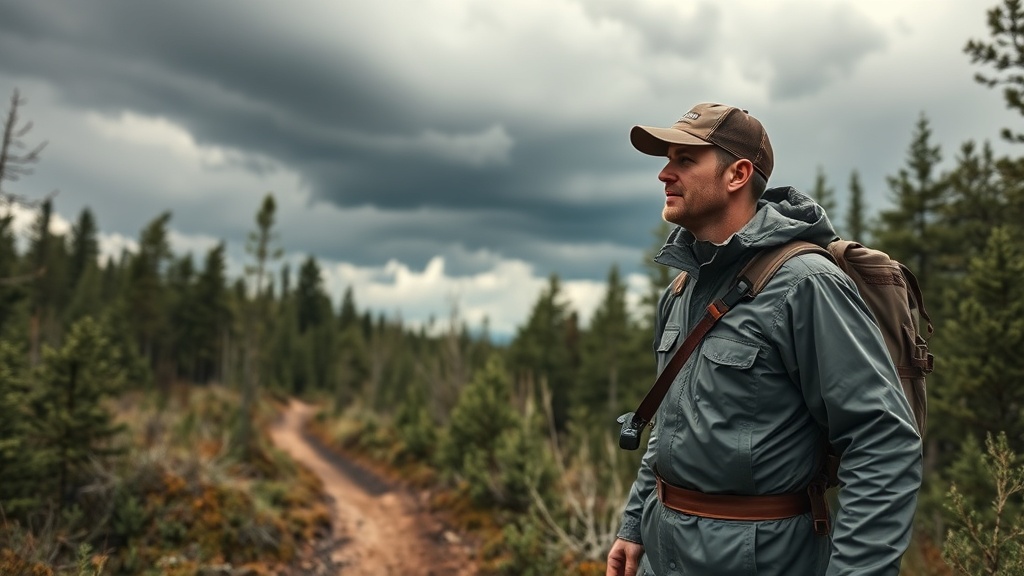
Weather in hunting country changes faster than most people expect. Valley floors and ridgelines can be 15 to 20 degrees apart, and mountain weather can shift from clear skies to whiteout conditions in under an hour. A quick weather plan before you leave camp eliminates most of the risk.
Check the right forecast
Do not rely on a single forecast for the nearest town. That town is probably at a lower elevation and in a different microclimate than where you are hunting. Use these sources together:
- NOAA point forecast: Go to forecast.weather.gov and click the map at your exact hunting location. This gives you an elevation-specific forecast with wind chill, precipitation probability, and hourly breakdowns2.
- Mountain-specific forecasts: For western hunts above 7,000 feet, check mountain weather services or zone forecasts that account for elevation bands.
- Radar and satellite: Before heading out each morning, pull up the nearest radar loop on your phone. A clear forecast means little if a fast-moving front is 60 miles out.
- Wind data: Wind speed matters more than temperature for safety. A 35-degree day with 25 mph wind produces a wind chill below 20 degrees. Check wind forecasts at your hunting elevation, not town level.
Pack for the worst realistic scenario
You do not need to carry gear for a blizzard on a September archery hunt. But you should pack for the worst weather that is reasonably likely during your hunt window. At minimum, always carry:
- A dry base layer in a waterproof stuff sack. If you sweat through your shirt on a steep climb and the temperature drops, a dry layer prevents a dangerous chill.
- A wind and rain shell. Lightweight packable shells weigh under 10 ounces and fit in a cargo pocket. There is no excuse to leave one behind.
- A warm hat and gloves. You lose heat fastest through your head and hands. Even in mild conditions, a fleece beanie weighs almost nothing and can make the difference between comfort and a miserable hike out.
Set a turnaround time
Before you leave camp, set a hard turnaround time that gets you back to your vehicle or camp before dark with a margin of at least 30 minutes. This is not optional – it is the single most important safety habit you can build. Getting caught in unfamiliar terrain after dark, especially in bad weather, is how straightforward hunts turn into search-and-rescue situations.
Factor in your return pace, not your outbound pace. You will be tired, possibly carrying meat, and moving through terrain that looks different in fading light.
Share your plan
Telling someone where you are going is the simplest and most effective safety measure in hunting. Search and rescue teams consistently say that the difference between a quick recovery and a multi-day search is whether someone knew the hunter’s plan3.
What to include in your trip plan
Give your contact person the following details before every hunt, even day trips:
- Your route: Where you are parking, which trail or drainage you are following, and roughly how far in you plan to go.
- Your timeline: When you are leaving, when you expect to be back, and when they should start worrying if they have not heard from you.
- Check-in schedule: Set a specific time you will check in by phone or text. If you are in an area with no cell service, agree on a time window after which your contact should alert authorities if you have not called.
- Vehicle description and location: Make and model, color, license plate, and where you plan to park. This gives search teams a starting point.
- Your gear and experience level: Let your contact know if you are carrying a GPS beacon, satellite communicator, or emergency shelter. This helps rescuers understand your capabilities.
Communication devices
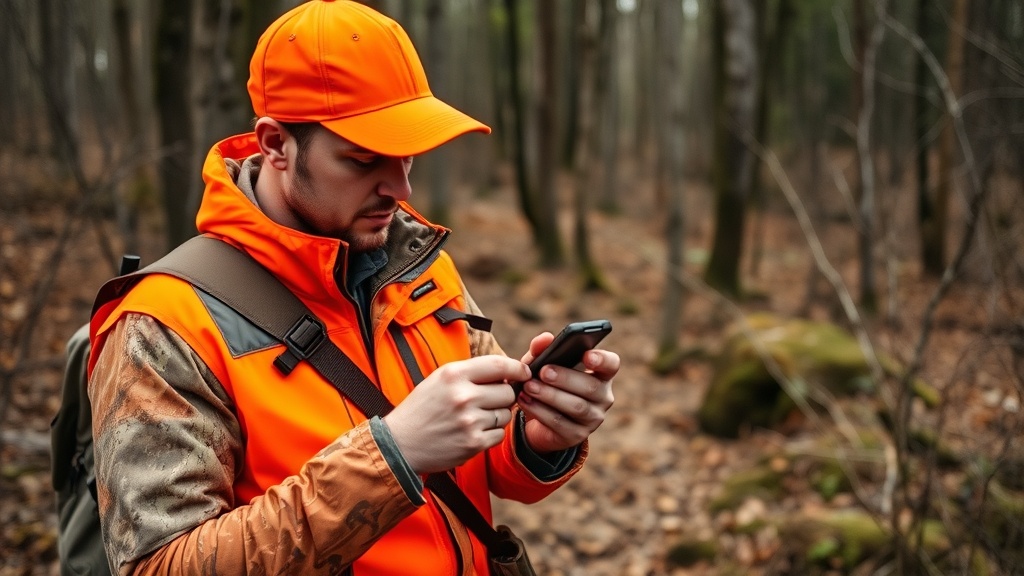
Cell phones are unreliable in most serious hunting country. If you hunt remote areas regularly, invest in a backup communication device:
- Satellite communicators (like a Garmin inReach or ZOLEO) allow two-way texting and SOS alerts anywhere on the planet. They cost $200 to $400 with a monthly subscription of $15 to $50. For backcountry hunters, this is the single best safety investment you can make.
- Personal locator beacons (PLBs) send a one-way SOS signal to search and rescue via satellite. No subscription required, but they only do one thing – call for help. They cannot send or receive messages.
- A whistle is a low-tech backup that carries farther than your voice and takes no batteries. Three blasts is the universal distress signal.
Field safety basics
Most field emergencies are not dramatic. They are a rolled ankle two miles from the truck, dehydration that turns into a headache and poor decisions, or a hunter who wandered off trail and cannot find the way back in fading light. Prepare for the common problems, not the unlikely ones.
Water and food
Dehydration degrades your judgment before you notice the physical symptoms. Carry at least two liters of water for a full-day hunt, more in warm weather or at high altitude. Do not plan to rely on streams unless you carry a filter or purification tablets.
Pack calorie-dense food that does not require preparation. Trail mix, jerky, energy bars, and peanut butter packets all work. Bring more than you think you need. If you get stuck overnight, those extra calories keep your body generating heat.
Navigation
A phone GPS app like onX Hunt or HuntStand is excellent, but phones break, die, and lose signal. Always carry a backup:
- Download offline maps before your trip. Do this at home over Wi-Fi, not in the field hoping for a signal.
- Carry a paper map and compass. You do not need to be an orienteering expert. Just knowing how to find north and identify the drainage you are in can get you back to a road.
- Mark your vehicle on your GPS before you leave it. This one habit has saved more hunters from a miserable night in the woods than any other.
- Pay attention to landmarks on the way in. Turn around periodically and look at the terrain from the return perspective. It looks different going the other direction.
Light and fire
Carry a headlamp with fresh batteries, even if you plan to be out of the field well before dark. Plans change. A wounded animal can pull you deeper into timber than you intended, and suddenly you are field dressing in the dark. A headlamp frees both hands and weighs a few ounces.
Carry a reliable fire-starting method – a butane lighter and a small bundle of fire-starting material (cotton balls with petroleum jelly work well and weigh almost nothing). If you are forced to spend an unexpected night out, fire provides warmth, light, a morale boost, and a signal for rescuers.
First aid
Your hunting first aid kit should prioritize the injuries you are most likely to encounter:
- Bleeding control: Gauze pads, elastic bandage, and a tourniquet. A deep cut from a knife during field dressing is the most common serious hunting injury4.
- Musculoskeletal: An elastic bandage for sprains and a pain reliever like ibuprofen.
- Blister care: Moleskin or blister bandages. A bad blister three miles from the truck can slow you to a crawl.
- Allergic reactions: Antihistamines and, if you carry a prescription, an epinephrine auto-injector.
- Wound closure: Butterfly bandages or wound closure strips for cuts that need to be held shut until you reach proper medical care.
Travel safety
The drive to and from your hunting area carries real risk, especially in the early morning hours, on unfamiliar rural roads, and in winter conditions. More hunters are injured in vehicle incidents related to their hunts than in the field itself.
Road conditions and fuel
- Check road conditions the night before, especially for forest service roads and mountain passes. State DOT websites and local ranger district offices have current information. A road that was passable in September may be gated or snowed in by November.
- Top off your fuel at the last reliable station. Do not assume there will be another gas station closer to your hunting area. In many western states, you can drive 80 miles between fuel stops.
- Know your vehicle’s limits. If you are driving a two-wheel-drive truck on a forest road rated for high clearance four-wheel-drive, turn around before you get stuck. Getting a vehicle unstuck in a remote area burns time, energy, and sometimes requires an expensive tow.
Vehicle emergency kit
Keep a basic kit in your vehicle year-round during hunting season:
- Jumper cables or a portable jump starter
- A tow strap rated for your vehicle weight
- A basic tool kit (pliers, screwdrivers, duct tape, zip ties)
- Extra water and food beyond what you carry in the field
- A wool blanket or sleeping bag
- A flashlight or lantern separate from your hunting headlamp
- Tire chains if you hunt in snow country
Avoid pushing weather windows
The most dangerous decision in hunting travel is “we can probably make it through before the storm hits.” If a winter storm, heavy fog, or ice event is forecast for your drive window, adjust your schedule. Leave early, leave late, or stay an extra day. No hunt is worth a rollover on a mountain road. Check weather radar before starting a long drive home, especially through mountain passes.
Helpful internal links
- First time hunter checklist
- Hunting in bad weather
- Hunt trip packing list
- Scouting basics – learn the terrain before your hunt so you can navigate safely in poor conditions
- Gear reviews – weather layers, boots, packs, and communication devices for safer hunts
Final checklist
Use this as a quick reference before every hunt. It takes five minutes and covers the essentials:
- Regulations: Confirm season dates and rules on the official state wildlife agency website.
- Maps: Download offline maps and save your parking location.
- Gear: Pack weather layers, water, food, headlamp, fire starter, first aid, and navigation backup.
- Tags and license: Verify you have the correct tags and your license is on your person.
- Trip plan: Share your route, timeline, and check-in schedule with your contact person.
- Vehicle: Check fuel, tire pressure, and road conditions. Confirm your vehicle emergency kit is stocked.
- Communication: Charge your phone and satellite communicator. Test them before you leave cell service.
- Weather: Check the forecast at your hunting elevation one final time the morning of your hunt.
A safety plan is not about being paranoid. It is about making good decisions before you are cold, tired, or stressed. Build the habit, keep it simple, and use it every time.
National Safety Council, “Hunting Safety Statistics.” Leading causes of hunting-related incidents include falls, hypothermia, and cardiac events, with firearms-related incidents accounting for a smaller share than most people assume. ↩︎
National Weather Service, “Point Forecast” tool at forecast.weather.gov. Provides hourly forecasts tied to specific latitude/longitude coordinates and elevation. ↩︎
National Association for Search and Rescue (NASAR). Overdue subjects with a known last point and intended route are located significantly faster than those without a filed plan. ↩︎
International Hunter Education Association (IHEA-USA), “Hunting Incident Reports.” Knife and broadhead cuts during field dressing are among the most frequently reported non-firearms hunting injuries. ↩︎
Explore Related Topics:
Notice an update we should make?
We strive for accuracy. Contact us here if you see incorrect or outdated info on this page.