Licenses and tags vary by state, but the process is consistent. Use this step-by-step checklist to avoid missed requirements. Every step below includes specific examples and common pitfalls that trip up hunters each year.
Step 1: Confirm hunter education
Most states require hunter education for new hunters. Complete it early because courses can fill. If you are mentoring a new hunter, make sure they meet the requirement before you plan a trip.
Hunter education requirements differ by state, and the details matter:
- Course format. Most states offer both fully online courses and hybrid courses (online study plus an in-person field day). A few states, including New York, still require an in-person component for all first-time hunters.1 Online-only courses from providers like Hunter-Ed.com and Kalkomey are accepted in many states, but not all. Verify acceptance before you pay.
- Age requirements. Many states allow youth to hunt under direct adult supervision without completing hunter education, but the age thresholds vary. Texas allows youth under 17 to hunt with a licensed adult without completing the course, while other states set the cutoff at 12 or 14.2 Do not assume your home state’s rules apply elsewhere.
- Reciprocity. If you completed hunter education in one state, most other states will accept it. You will need your original certificate number or a copy of the card. The International Hunter Education Association (IHEA) maintains a verification system that many states use.3
- Bowhunter education. Some states require a separate bowhunter education course for archery hunting. This is in addition to basic hunter education, not a replacement for it.
Common pitfall: Waiting until summer to complete hunter education and finding that all field day sessions are booked through fall. Start this process in January or February.

Step 2: Create your state account
Most states use an online system for licenses and tags. Create your account well before deadlines and store your login details securely.
Each state runs its own licensing portal. Some use third-party vendors like Aspira or Brandt, while others have custom-built systems. Here is what to know:
- Create accounts months before deadlines. State licensing servers routinely crash on deadline day. If you wait until April 1 to create your Colorado account for an April application deadline, you risk being locked out.
- Use consistent personal information. Your name, date of birth, and Social Security number (where required) must match across all states. A mismatch can cause your application to be rejected or can create duplicate accounts that complicate your point history.
- Save your Customer Identification Number (CIN). Most states assign you a unique ID. Write it down. You will need it to check draw results, buy tags, and report harvests.
- Enable email notifications. Most portals let you opt in to deadline reminders and draw result notifications. Turn these on.
For out-of-state hunts, you will need a separate account in each state where you hunt. Keep a secure record (password manager or written list in a safe place) of every state portal URL, your username, CIN, and password.
Step 3: Decide on species and unit
Choose your target species and the unit or zone you plan to hunt. This affects tag type and rules. Do not guess – check the unit maps.
This step requires homework. The unit you choose determines:
- Tag type and cost. Some units are draw-only; others are over-the-counter. Some states offer limited-entry tags for trophy-quality units and general tags for less-managed areas.
- Season dates and weapon restrictions. The same species may have different season dates depending on the unit. Some units are archery-only or muzzleloader-only during certain periods.
- Harvest success rates. Most state wildlife agencies publish unit-level harvest statistics. Colorado publishes detailed harvest reports by unit, weapon type, and license type.4 Use this data to set realistic expectations.
- Access and terrain. A unit with a 40% success rate means nothing if the accessible portions are overcrowded and the best habitat is locked behind private land. Cross-reference unit boundaries with land ownership maps.
State-by-state variation: Western states (Colorado, Wyoming, Montana, Idaho, Arizona, New Mexico) use Game Management Units (GMUs) with specific draw odds. Eastern and midwestern states typically use broader zones or county-based systems with general tags. Southern states like Texas and Georgia often sell statewide tags with no unit restrictions for most species.
Spend time studying unit maps, reading harvest reports, and talking to other hunters or biologists before committing your application to a specific unit.
Step 4: Apply for a draw if required
If the hunt requires a draw, apply by the deadline. Save your confirmation number and check for updates from the agency.
The draw system is where most out-of-state hunters make costly mistakes. Key details:
- Application deadlines are firm. There are no extensions. If the deadline is 11:59 PM Mountain Time on April 1, the system locks at that moment. Do not test it.
- Application fees vs. tag fees. Most states charge a non-refundable application fee ($5-$50+) and a separate tag fee that is charged only if you draw. Some states charge the full tag fee upfront and refund it if you do not draw. Know which model your state uses so you can budget accordingly.
- Group applications. Most western draw systems allow group applications where your party draws together or not at all. Group applications reduce individual odds because the system must find enough tags for the entire group. Apply solo if maximizing your draw odds matters more than hunting with specific partners.
- First, second, and third choices. Many states let you list multiple unit choices on one application. Your first choice gets priority. In some states, listing a second or third choice does not reduce your first-choice odds; in others (like Colorado’s hybrid system), it can affect point accumulation.5
Common pitfall: Submitting the application but not confirming payment went through. Always check your confirmation email and verify the charge on your bank statement.

Step 5: Buy the correct license
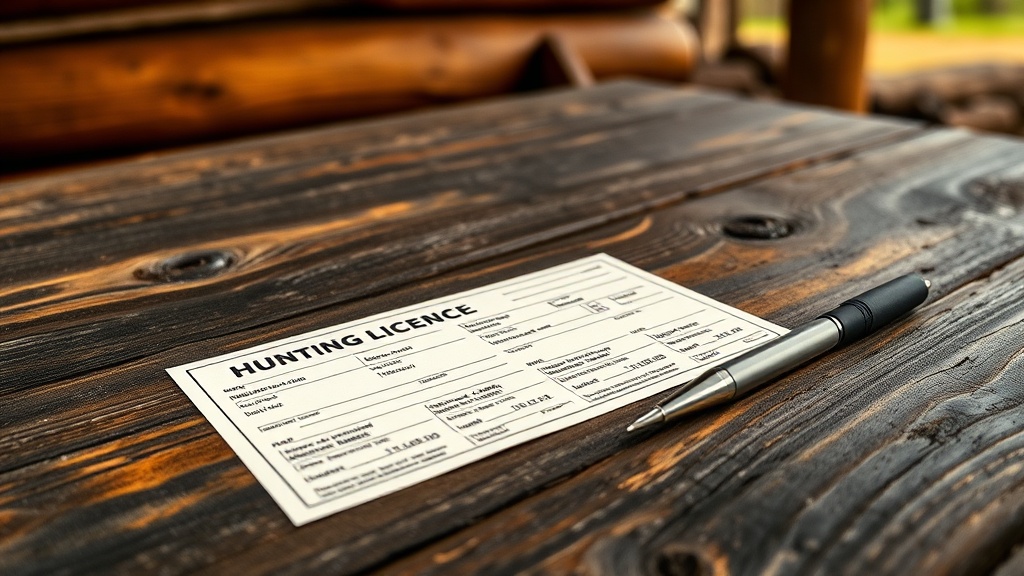
Make sure you purchase the correct residency status and any required stamps. If you are unsure, verify with the state website.
Licensing structures vary widely, and buying the wrong license is more common than you might think:
- Base license vs. species tag. Most states require a base hunting license plus a separate tag or permit for specific species. In Colorado, you need a base hunting license AND a separate elk tag. In Texas, you buy a single hunting license that covers most species, but you need additional tags for turkey and certain other game.
- Resident vs. non-resident. The price difference is significant. A resident Colorado elk tag costs a fraction of a non-resident tag. Misrepresenting your residency is a serious violation that can result in loss of hunting privileges across multiple states through the Interstate Wildlife Violator Compact.6
- Required stamps and endorsements. Federal duck stamps are required for waterfowl hunting nationwide. Many states also require state waterfowl stamps, habitat stamps, or HIP (Harvest Information Program) registration. HIP registration is federally required for all migratory bird hunters and is free in most states, but you must complete it.7
- Youth and senior licenses. Many states offer discounted licenses for youth hunters (typically under 16 or 18) and senior hunters (typically 65+). Some states offer free licenses for resident seniors, active military, or disabled veterans.
What happens if you buy the wrong license: Contact the state agency immediately. Some states allow exchanges; others do not issue refunds but may let you apply the credit to the correct license. Do not hunt on the wrong license – it is a violation regardless of intent.
Step 6: Verify validation steps
Some states require you to validate your license or tag after purchase. Do this immediately so you are not delayed at the start of your hunt.
Validation requirements catch many hunters off guard:
- Physical tag validation. Some states require you to sign your tag, write the date on it, or notch specific fields before you begin hunting. Tennessee, for example, requires you to sign your license before hunting.
- E-tag activation. States transitioning to electronic tags may require you to activate or download your tag to a specific app before hunting. Verify that the app works offline, because you may not have cell service in the field.
- Mandatory orientation or check-in. A few special hunts (managed hunts, controlled access areas, military base hunts) require pre-hunt orientation or check-in at a specific location before you can hunt.
- Vehicle registration. Some National Wildlife Refuges and military installations require you to register your vehicle and obtain an access permit in addition to your state license and tags.
Common pitfall: Assuming your digital license on your phone is sufficient in all states. Some states still require you to carry a printed copy or a physical license card. Check before you go.
Step 7: Learn tagging and reporting
Know how to tag your harvest and how to report it. A missed report can create issues later.
Tagging and reporting rules are not optional. They generate the data that wildlife agencies use to manage populations, and failure to comply can result in fines, point loss, or inability to apply in future seasons.
- Immediate tagging. Most states require you to attach your tag to the animal immediately after harvest, before moving it. “Immediately” typically means before you begin field dressing, though some states allow you to dress the animal first. Know the rule for your state.
- Carcass tag placement. States specify where to attach the tag (antler base, leg, ear, etc.) and how to notch or mark it (date, time, location). Carry a pen, zip ties, and wire in the field so you can comply.
- Electronic reporting. Many states now require or allow harvest reporting through a phone app or website. Some require reporting within 24 hours of harvest; others give you up to 10 days. A few states require you to report before transporting the animal across certain checkpoints.
- Mandatory check stations. Some states require you to bring your harvest to a check station for biological sampling (age, weight, disease testing). Missing a mandatory check station is a violation.
- Failure-to-report consequences. In several western states, failing to report your harvest (or reporting that you did not hunt) by the deadline will prevent you from applying for tags the following year. Colorado, for example, will not let you apply for a draw until your mandatory harvest report is submitted.
Preference and bonus point systems
If you hunt western states, understanding point systems is essential. They determine when and whether you draw a tag.
- Preference points guarantee you a tag once you accumulate enough points. States with preference point systems include Colorado (for most species), Wyoming (for moose, bison, and bighorn sheep), and several others. The top point holders draw first.
- Bonus points improve your odds but do not guarantee a tag. Wyoming uses bonus points for elk, deer, and antelope. Each point gives you additional entries in the random draw, but a hunter with zero points can still draw over someone with 10 points.
- Hybrid systems combine both. Colorado uses a hybrid system for many species where a portion of tags go to the highest point holders and the remaining tags go through a weighted random draw.
- Point creep is real. As more hunters enter draw systems, the number of points needed to draw a tag in popular units increases every year. A unit that took 5 preference points to draw a decade ago may now take 12. Track point thresholds annually so you can set realistic expectations.
What happens if you miss a deadline: In most states, you simply lose that year’s opportunity to apply or gain a point. You do not lose existing points (though a few states have “use it or lose it” rules where you must apply or buy a point every year to keep your points active). Check your state’s specific rules, because losing a decade of accumulated points to a missed deadline is a painful and avoidable mistake.
Common mistakes
- Applying for the wrong unit or season type. Double-check every field before submitting.
- Missing a required stamp. HIP registration and federal duck stamps are the most commonly forgotten.
- Forgetting to validate a tag. Check validation requirements as soon as you receive your tag.
- Assuming online systems will work on deadline day. Apply at least 48 hours before any deadline.
- Not reporting harvest from a prior season. This blocks future applications in many states.
Helpful internal links
Final checklist
- Confirm rules on the official state website.
- Save maps for offline use.
- Pack essentials and verify tags.
- Review safety and access rules before you leave.
New York State Department of Environmental Conservation, “Hunting Education,” dec.ny.gov. Requirements are updated annually. ↩︎
Texas Parks and Wildlife Department, “Hunter Education Requirements,” tpwd.texas.gov. ↩︎
International Hunter Education Association, “HunterCourse.com Verification,” ihea-usa.org. ↩︎
Colorado Parks and Wildlife, “Harvest Statistics,” cpw.state.co.us. Unit-level data is published annually. ↩︎
Colorado Parks and Wildlife, “Big Game Brochure,” cpw.state.co.us. The draw system details are explained in the application section of each year’s brochure. ↩︎
Interstate Wildlife Violator Compact, wildlifeviolatorcompact.org. Member states can suspend hunting privileges for violations committed in any member state. ↩︎
U.S. Fish and Wildlife Service, “Harvest Information Program,” fws.gov. HIP registration is required under federal law for all migratory bird hunters. ↩︎
Explore Related Topics:
Notice an update we should make?
We strive for accuracy. Contact us here if you see incorrect or outdated info on this page.