Wyoming is one of the finest hunting destinations in North America, offering uncrowded landscapes, robust big game populations, and vast expanses of public and accessible land. The state is renowned for its pronghorn hunting – Wyoming holds the largest pronghorn population in the world – as well as outstanding elk, mule deer, white-tailed deer, moose, bighorn sheep, mountain goat, and black bear opportunities. Wide-open sagebrush prairies, timbered mountain ranges, and river-bottom corridors provide varied terrain and habitat across the state.
The Wyoming Game and Fish Department (WGFD) manages all wildlife, hunting licenses, and regulations in the state. WGFD divides Wyoming into hunt areas, each with specific season dates, bag limits, and license allocations. The department uses a well-established draw system with preference points that governs access to most big game hunting opportunities.
Wyoming’s licensing system is built around limited-quota licenses awarded through a competitive draw. Understanding the preference point system, application deadlines, and non-resident quotas is essential for any hunter planning a Wyoming trip. This guide covers every aspect of the process, from hunter education to buying your license and building a long-term draw strategy.1
| License/Permit | Residency | Fee | Includes |
|---|---|---|---|
| Resident Hunting License | Resident | $30.00 | hunting |
| Non-Resident Hunting License | Nonresident | $175.00 | hunting |
| Resident Elk License | Resident | $55.00 | elk tag |
| Non-Resident Elk License | Nonresident | $637.00 | elk tag |
| Resident Deer License | Resident | $45.00 | deer tag |
| Non-Resident Deer License | Nonresident | $388.00 | deer tag |
| Resident Pronghorn License | Resident | $40.00 | pronghorn tag |
| Non-Resident Pronghorn License | Nonresident | $276.00 | pronghorn tag |
| Resident Black Bear License | Resident | $40.00 | bear tag |
| Non-Resident Black Bear License | Nonresident | $282.00 | bear tag |
| Resident Mountain Lion License | Resident | $30.00 | mountain lion tag |
| Non-Resident Mountain Lion License | Nonresident | $282.00 | mountain lion tag |
| Resident Moose License | Resident | $100.00 | moose tag |
| Non-Resident Moose License | Nonresident | $1884.00 | moose tag |
| Resident Bighorn Sheep License | Resident | $100.00 | bighorn sheep tag |
| Non-Resident Bighorn Sheep License | Nonresident | $2535.00 | bighorn sheep tag |
| Resident Turkey License | Resident | $20.00 | turkey tag |
| Non-Resident Turkey License | Nonresident | $90.00 | turkey tag |
| Preference Point Application | All | $5.00 | preference point |
| Federal Duck Stamp | All | $25.00 | waterfowl hunting |
Hunter Education Requirements
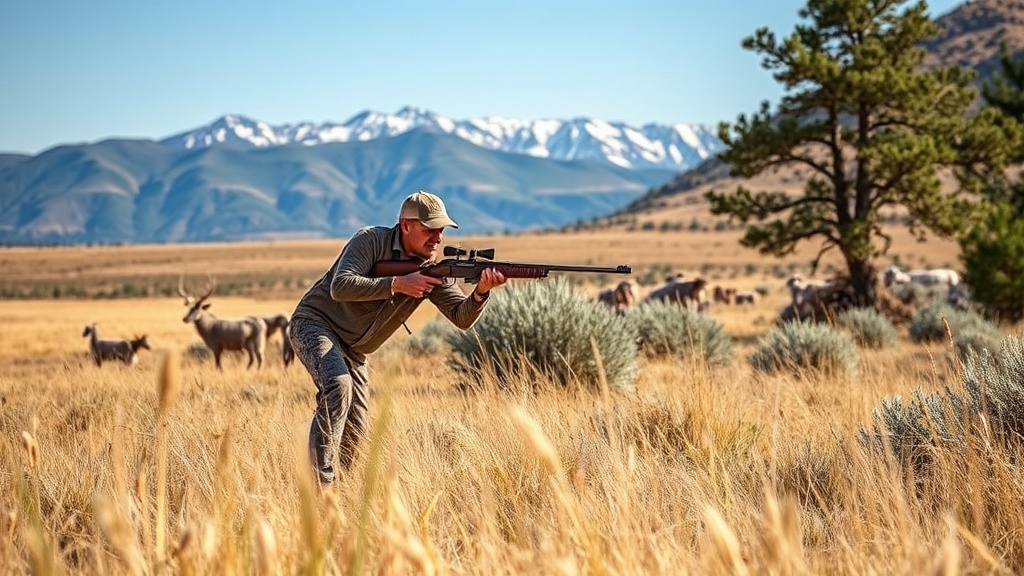
Wyoming requires hunter education for anyone born on or after January 1, 1966. If you were born before that date, you are exempt from the hunter education requirement. This applies to both residents and non-residents.
Course Options
Wyoming offers several ways to meet the hunter education requirement:
- Classroom course: Traditional in-person courses taught by WGFD-certified volunteer instructors at locations across the state. Courses typically run 10 to 12 hours and cover firearm safety, wildlife conservation, hunting ethics, survival, and first aid.
- Online course with field day: Complete the instructional portion online through an approved provider, then attend a mandatory in-person field day for hands-on firearm handling evaluation and the final exam.
- Online-only course: Wyoming allows hunters to complete a fully online course through certain approved providers. No field day is required for this option.
Minimum Age
Wyoming allows hunters as young as 11 years old to purchase a hunting license with proof of hunter education. Youth ages 11 to 13 must be accompanied by a licensed adult (parent, guardian, or other responsible adult) while hunting. Hunters 14 and older can hunt independently with a valid license.
Exemptions
Hunters born before January 1, 1966 do not need hunter education. Anyone who holds a valid hunter education certificate from another state or province is also exempt from retaking the course. Wyoming recognizes certificates from all U.S. states and Canadian provinces. Provide your certificate number when purchasing your license.
Types of Hunting Licenses
Wyoming’s licensing system revolves around limited-quota licenses for most big game species, distributed through the annual draw. Some licenses are available over the counter. Residency requires living in Wyoming for at least one full year.
| License Type | Who Qualifies | Key Notes |
|---|---|---|
| Resident Hunting License | Wyoming residents | Provides general hunting privileges; draw licenses purchased separately |
| Non-Resident Hunting License | Out-of-state hunters | Base hunting privileges for non-residents |
| Resident Conservation Stamp | Wyoming residents | Required for all license holders; funds conservation programs |
| Non-Resident Conservation Stamp | Non-residents | Required for all non-resident license holders |
| Youth License | Residents and non-residents under 18 | Reduced-cost license for young hunters |
| Lifetime License | Wyoming residents | One-time purchase covering hunting for life |
| Small Game License | Residents and non-residents | Covers upland birds, small game, and migratory birds |
| Bird Farm License | Residents and non-residents | For hunting on licensed bird farms only |
| Pioneer License | Residents 65 and older | Reduced-cost license for senior Wyoming residents |
A resident hunting license costs $30.00, while non-residents pay $175.00. Resident elk licenses are $55.00, compared to $637.00 for non-residents. Pronghorn licenses run $40.00 for residents and $276.00 for non-residents. Wyoming’s cost structure includes a base license, a conservation stamp, and individual species licenses, which can add up quickly.
Conservation Stamp
Every hunter in Wyoming must purchase a conservation stamp in addition to their hunting license. The conservation stamp is required before you can apply for or purchase any hunting license. Revenue from the stamp funds habitat improvement, wildlife management, and public access projects throughout the state.
Tags, Stamps, and Permits
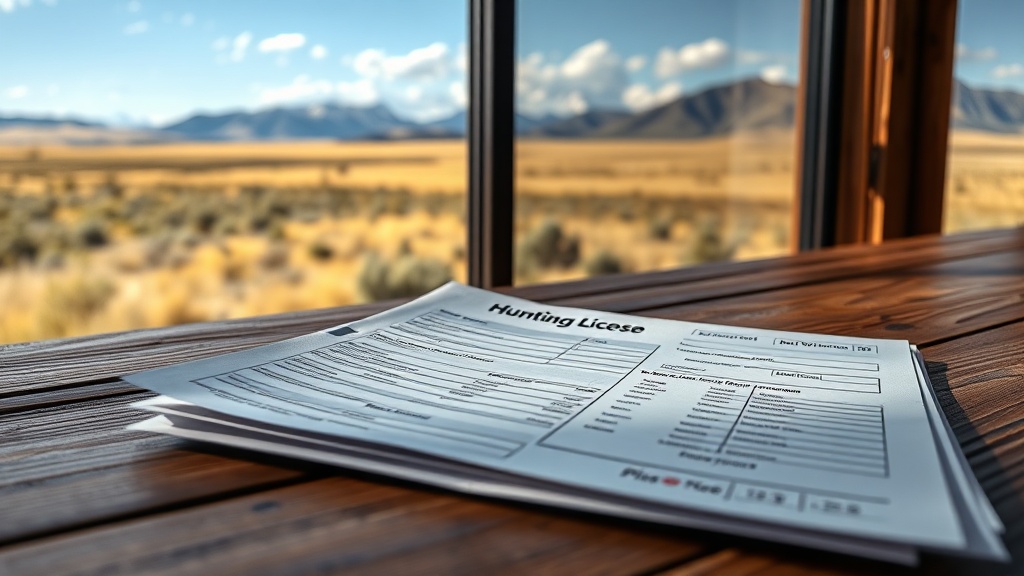
Wyoming uses limited-quota licenses for most big game species, which function as both a license and a tag for a specific species and hunt area. Here are the key categories:
- Elk license: Awarded through the draw for specific hunt areas. Some leftover licenses may be available after the draw.
- Deer license: Awarded through the draw. Separate categories exist for white-tailed deer and mule deer in some areas.
- Pronghorn (antelope) license: Awarded through the draw. Wyoming’s pronghorn tags are among the most popular in the country.
- Moose license: Extremely limited and awarded through the draw. Preference points are essential.
- Bighorn sheep license: Very limited tags distributed through the draw with long wait times.
- Mountain goat license: Extremely limited; draw only.
- Black bear license: Available through the draw for specific hunt areas.
- Mountain lion license: Available for purchase; some areas have quota systems.
- Turkey license: Available through the draw for spring and fall seasons.
- Small game and bird license: Available over the counter for upland birds, waterfowl, and small game.
- Federal Duck Stamp: Required for migratory waterfowl; purchased separately.
- HIP registration: Required for all migratory bird hunters.
Preference Points
Wyoming’s preference point system is one of the most structured in the West and is central to the state’s big game draw. Here is how it works:
- Species covered: Preference points are tracked separately for elk, deer, pronghorn, moose, bighorn sheep, mountain goat, bison, and wild turkey.
- How points accumulate: If you apply for a draw and are not selected, you earn one preference point for that species. Points carry over to future years.
- Full-price vs. reduced-price points: Wyoming allows you to purchase a preference point without applying for a license. A full-price preference point costs the same as the license fee and is refundable if you later draw a tag that year. A reduced-price preference point costs significantly less but does not include a chance to draw that year – it simply banks a point for the future.
- How points are used: In the draw, 75 percent of licenses in most areas go to applicants with the most preference points. The remaining 25 percent are awarded randomly, giving all applicants a chance regardless of points.
- Point creep: For highly sought-after areas and species (especially moose and sheep), the number of points needed to draw has increased steadily over time. Study the WGFD draw statistics to understand how many points are typically required for specific areas.
Building a long-term preference point strategy is essential for anyone serious about hunting premium species in Wyoming. The WGFD website publishes detailed draw reports with point cutoffs for each hunt area.
How to Buy Your License
Wyoming provides multiple ways to purchase licenses, apply for the draw, and buy preference points.
Online
WGFD’s online licensing system is accessible through the department’s website at wgfd.wyo.gov. You can create an account, apply for the draw, purchase over-the-counter licenses and conservation stamps, buy preference points, and manage your hunter profile.
In Person
Licenses are available at WGFD regional offices and authorized license-selling agents throughout Wyoming, including sporting goods stores and some general retailers.
Phone
You can contact WGFD to purchase licenses and stamps by phone. Have your personal information, hunter education number, and payment method ready.
Required Documents
To purchase a Wyoming hunting license, you will need:
- Valid photo identification (driver’s license or state-issued ID)
- Proof of Wyoming residency (if purchasing a resident license; one full year of residency required)
- Hunter education certificate number (if born on or after January 1, 1966)
- Social Security number
- Conservation stamp (must be purchased before applying for or buying any hunting license)
Application Deadlines and Important Dates
Wyoming’s hunting calendar is driven by the annual draw. The draw application period is the single most important deadline for big game hunters. Missing it means waiting another full year.
Key Dates to Know
- Draw application period: Typically opens in early January and closes in late February or early March for most big game species (elk, deer, pronghorn, moose, sheep, goat, bison). Exact dates vary each year.
- Draw results: Usually posted in mid-May through the WGFD online system.
- Preference point purchase deadline: If you want to buy a preference point without applying for a specific license, you must do so before the application deadline, typically by October 31 for most species.
- Leftover licenses: Unfilled licenses from the draw become available on a first-come, first-served basis, usually in mid-June. These go quickly for popular areas.
- General season small game and bird licenses: Available over the counter year-round.
- Archery season: Typically opens September 1 for many big game species.
- General rifle season: Varies by species and hunt area; typically October through November.
- Spring turkey season: Applications due in early January with the big game draw; season runs in April and May.
Start the process early. Non-residents in particular should begin researching hunt areas and draw odds in the fall before the January application window opens.
Reciprocity and Out-of-State Hunters
Wyoming is a top-tier destination for non-resident hunters, but the state imposes quotas that make planning essential. Here is what out-of-state hunters need to know:
- Non-resident licenses: Available through the WGFD online system. Non-resident fees are significantly higher than resident fees.
- Non-resident quotas: Wyoming limits the percentage of licenses in each hunt area that can go to non-residents. For most species, non-residents receive up to 20 percent of the available licenses in a given area. This makes non-resident draw odds lower than resident odds in popular areas.
- Hunter education: Wyoming accepts hunter education certificates from all U.S. states and Canadian provinces. Provide your certificate number when setting up your WGFD account.
- No outfitter requirement: Wyoming does not require non-resident hunters to hire an outfitter for any species or area, unlike some neighboring states. DIY non-resident hunting is fully legal on public land.
- Preference points: Non-residents accumulate preference points in the same system as residents. Building points over multiple years is the standard approach for high-demand species.
- Conservation stamp: Non-residents must purchase the conservation stamp before applying for the draw, just like residents.
Wyoming’s combination of accessible public land, no outfitter mandate, and a transparent preference point system makes it one of the most popular western states for non-resident hunters despite the quotas.
Special Considerations
Landowner Licenses
Wyoming offers a landowner license program that provides big game licenses to qualifying landowners. To be eligible, landowners must own or lease a minimum amount of qualifying habitat in a designated hunt area. Landowner licenses are intended to help manage game on private land and may be transferable to a designated hunter, depending on the specific program rules. Check WGFD regulations for current acreage requirements and application procedures.
Disabled Hunter Permits
Wyoming provides special permits for hunters with permanent disabilities. Accommodations may include permission to hunt from a vehicle, use a crossbow during archery-only seasons, or other modifications. Applicants must provide medical documentation and submit an application to WGFD for review.
Youth Hunting
Wyoming encourages youth participation through reduced-cost licenses and mentored hunting opportunities. Youth ages 11 to 13 must be accompanied by a licensed adult while hunting. The state also offers youth-only hunting opportunities and special draw categories for young hunters in some hunt areas.
Walk-In Hunting Areas
Wyoming’s Walk-In Areas (WIA) program provides public hunting access on enrolled private lands. Landowners voluntarily enroll their property, and the program is free for hunters. Walk-In Areas are marked with signs and mapped on the WGFD website and the WGFD mobile app. Both residents and non-residents can hunt Walk-In Areas under the same rules.
Full-Price vs. Reduced-Price Preference Points
Understanding the difference between full-price and reduced-price preference points is important for your long-term strategy. A full-price point costs the same as the license and enters you into the draw. If you do not draw, you keep the point and receive a refund. A reduced-price point costs much less and simply banks a point for the future without entering the draw. Reduced-price points are ideal for years when you cannot make the trip but want to continue building points. Study the WGFD fee schedule and draw system carefully before choosing your approach each year.
Planning Your Hunt
With your Wyoming hunting license, conservation stamp, and any drawn tags in hand, use these HuntingPrime resources to prepare:
- Wyoming Hunting Seasons: Review current season dates and bag limits in our Wyoming hunting season guide.
- Wyoming Hunting Regulations: Get a detailed breakdown of rules and requirements in our Wyoming hunting regulations guide.
- Wyoming Land Access: Explore public lands, Walk-In Areas, and BLM areas in our Wyoming land access guide.
- General Guides: Browse our complete library of hunting guides for tips on scouting, gear, field care, and more.
Always verify the latest regulations directly with the Wyoming Game and Fish Department before your hunt. Draw rules, preference point thresholds, season structures, and non-resident quotas can change each year.
Last verified: February 13, 2026 — Official sourceExplore Related Topics:
Notice an update we should make?
We strive for accuracy. Contact us here if you see incorrect or outdated info on this page.