Florida sits at the southern terminus of the Atlantic Flyway, providing wintering habitat for a wide variety of migratory ducks and resident waterfowl species. Commonly hunted waterfowl include Mallard, Wood Duck, Pintail, Teal, Canada Goose, Snow Goose. The Florida Fish and Wildlife Conservation Commission (FWC) manages waterfowl hunting across the state’s extensive network of freshwater marshes, lakes, impoundments, coastal lagoons, and flooded agricultural lands. While Florida is not traditionally thought of as a waterfowl destination compared to the Mississippi or Central Flyways, the state holds solid populations of wintering ducks and offers unique hunting experiences in subtropical wetland environments.
| Season Type | Opens | Closes | Notes |
|---|---|---|---|
| General | November 22, 2025 | January 31, 2026 | Duck season follows USFWS frameworks. Dates vary by zone. |
Blue-winged teal are among the most commonly harvested ducks in Florida, arriving early in the fall migration. Ring-necked ducks, mottled ducks (a resident species), green-winged teal, wood ducks, and various diving ducks also provide hunting opportunities. Florida is notable for its year-round population of mottled ducks, a non-migratory species closely related to the mallard that inhabits the state’s marshes and agricultural wetlands.
Waterfowl hunting in Florida is governed by both state and federal regulations, including requirements for a Federal Duck Stamp and HIP certification. Always check current FWC and federal rules before hunting, as seasons, bag limits, and area restrictions can change each year.
Season Overview
Florida’s duck season typically opens in late November or early December and runs through late January, though the exact dates vary by year and are set within the federal framework. A split season format is common, with a short break between segments.
 An early teal-only season usually runs for a two-week window in September, targeting blue-winged teal migrating south along the Atlantic Flyway. A special early-season mottled duck opportunity may also be available in some years, though mottled duck harvest is carefully managed due to the species’ resident status and conservation concerns.
Goose seasons in Florida are limited, as goose populations are smaller compared to states further north in the flyway. Youth waterfowl hunting days offer young hunters additional opportunities.
For current season dates, visit the Florida hunting seasons page.
Licensing and Tags
Waterfowl hunting in Florida requires a valid hunting license, a Florida waterfowl permit, a Federal Duck Stamp (for hunters aged 16 and older), and Harvest Information Program (HIP) certification. All four are required before you can legally hunt ducks or geese in Florida. Residents can expect to pay $17.00 for a resident hunting license, while nonresidents should budget for the higher $151.50 nonresident fee.
For hunting on WMAs, a management area permit is also needed. Some WMAs operate quota hunts for waterfowl with limited permits available through the FWC drawing system.
Residents and nonresidents have separate license options. The waterfowl permit and HIP certification can be obtained during the license purchase process.
For details on licenses and permits, see the Florida hunting license guide.
Regulations Highlights
Key waterfowl hunting regulations in Florida include:
 <strong>Daily limit:</strong> 6 | <strong>Possession limit:</strong> 18
- Bag limits: Daily bag limits follow the federal framework, with species-specific limits for certain ducks. Mottled duck limits are typically more restrictive due to conservation concerns. Check the current regulations for species-specific details.
- Non-toxic shot: Federal law requires the use of non-toxic shot for all waterfowl hunting. Lead shot is prohibited.
- Shooting hours: Legal shooting is from one half hour before sunrise to sunset.
- Species identification: Proper identification on the wing is essential, particularly to distinguish mottled ducks (which have lower bag limits) from similar-looking hen mallards and black ducks.
- Motorized boat restrictions: Some WMAs restrict the use of motorized boats or airboats during waterfowl hunts. Check area-specific regulations.
- Federal Duck Stamp: Required for all waterfowl hunters aged 16 and older. Must be signed across the face of the stamp.
- Reporting: HIP certification is required. Some WMAs may have additional check-in and check-out requirements.
Review the full regulations on the Florida hunting regulations page.
Where to Hunt
Florida’s public land system includes many WMAs and other areas open to waterfowl hunting. Top spots include:
- Lake Okeechobee – The largest freshwater lake in Florida provides vast marsh habitat around its perimeter. The lake’s marshy littoral zone and surrounding impoundments attract ring-necked ducks, blue-winged teal, and other species. Access is available from multiple points around the lake.
- Three Lakes Wildlife Management Area – In Osceola County, this WMA features marshes, prairies, and lake edges that hold ducks during the wintering period. Blue-winged teal and mottled ducks are common. Quota hunts may apply.
- T.M. Goodwin Waterfowl Management Area – Located near Fellsmere in Brevard County, this managed impoundment area is specifically designed for waterfowl hunting. Moist-soil units attract large concentrations of ducks, and hunts operate on a quota or reservation system.
- Lake Kissimmee and Kissimmee Chain of Lakes – Central Florida’s chain of lakes provides good duck hunting, particularly for ring-necked ducks and teal, along marshy shorelines and emergent vegetation.
- St. Johns River marshes – The upper St. Johns River system in Brevard and Indian River counties features extensive freshwater marshes that attract wintering ducks. Several WMAs along the river offer public hunting access.
Many of these areas require a management area permit, and popular spots fill quickly. Scout ahead and arrive early. For more on public access, visit the Florida hunting land page.
Tactics and Strategies
Waterfowl hunting in Florida involves adapting to the state’s shallow, freshwater-dominated wetland systems.
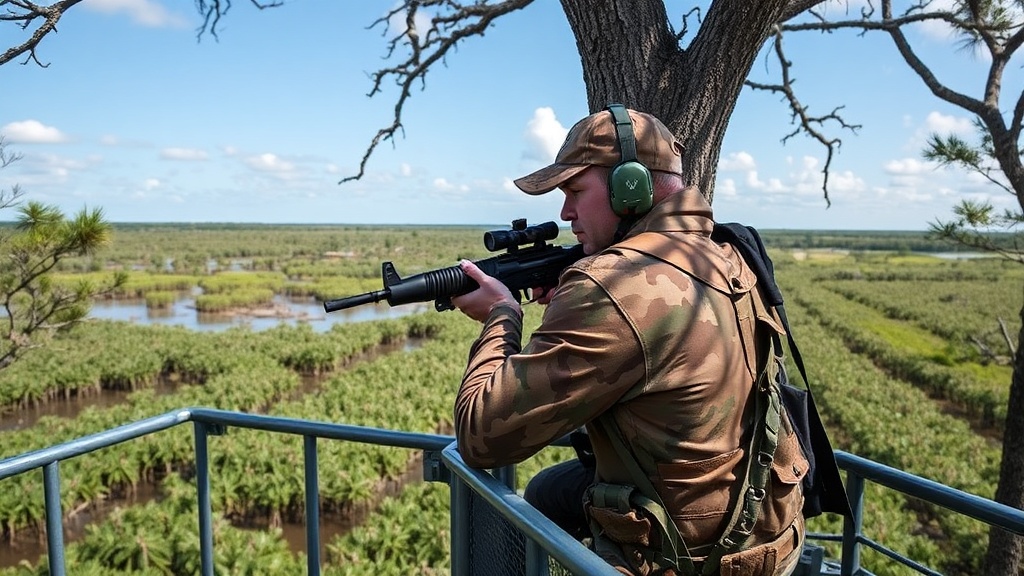
- Hunt shallow marsh edges and potholes. Florida’s prime duck habitat often consists of shallow marsh with emergent vegetation like maidencane, pickerelweed, and bulrush. Set up along open potholes or shallow flats where ducks feed and loaf. Small decoy spreads of teal and mallard decoys work well in these tight quarters.
- Target moist-soil impoundments. Managed impoundments on WMAs like T.M. Goodwin draw ducks into controlled water levels with natural food production. Hunts on these units can produce good shoots on teal, ring-necked ducks, and other species.
- Focus on teal during the early season. The September teal season is fast-paced and productive in Florida. Blue-winged teal flood into the state’s marshes, rice fields, and shallow impoundments. Small decoy spreads with spinning-wing decoys over shallow water are effective.
- Hunt lake edges for diving ducks. Ring-necked ducks and scaup concentrate on Florida’s larger lakes. Hunting from a boat blind or staked-out layout boat along lake edges and points can produce good shoots. Diver decoy spreads set in deeper water along drop-offs work well.
- Scout for mottled ducks. Mottled ducks are resident birds found year-round in Florida’s marshes and agricultural fields. They respond to mallard-type calling and decoys. Hunting them often involves small, intimate setups along marsh edges and drainage ditches.
Scouting is essential. Florida’s vast marsh and lake systems spread birds out, so locating concentrations before the hunt is key to success.
Gear Considerations
Florida’s waterfowl season falls during mild to cool weather, with temperatures often ranging from the 50s to 70s. Early teal season in September is warm and humid. Gear choices should account for wet conditions, warm temperatures, and insect activity.
Essential gear includes:
- A 12- or 20-gauge shotgun with non-toxic waterfowl loads in appropriate shot sizes
- Lightweight waders or hip boots for shallow marsh hunting, or neoprene chest waders for deeper water and cooler conditions
- A small to medium decoy spread suited to the species and the compact wetland habitats typical of Florida
- Duck calls, with an emphasis on teal whistles and basic mallard calls
- Camouflage clothing in marsh or wetland patterns
- A portable blind, boat blind, or natural cover setup for concealment
- Insect repellent for early-season and warm-weather hunts
- Sunscreen and a wide-brimmed hat for the often-sunny Florida conditions
- A quality cooler for keeping birds cool in warm weather
For gear reviews, visit the gear hub and the game calls review.
Plan Your Hunt
Florida waterfowl hunting offers unique opportunities to hunt in subtropical wetlands along the Atlantic Flyway. Use these resources to plan your trip:
- Waterfowl Hunting Guide – species identification, flyway information, and general tactics
- Florida Location Hub – hunting opportunities across the Sunshine State
- Scouting Basics – how to find and pattern waterfowl
- First-Time Hunter Checklist – essentials for your first waterfowl hunt
Explore Related Topics:
Notice an update we should make?
We strive for accuracy. Contact us here if you see incorrect or outdated info on this page.