Waterfowl include ducks, geese, and swans. These birds belong to migratory species protected under the Migratory Bird Treaty Act1. To hunt waterfowl, hunters aged 16 and older must have a valid Federal Duck Stamp2.
Commonly Hunted Waterfowl
| Species | Key Examples | Notes |
|---|---|---|
| Ducks | Mallard, Teal, Wood Duck | Hunted in wetlands or flooded fields |
| Geese | Canada Goose, Snow Goose | Common in fields, lakes, riverbanks |
| Swans | Tundra Swan (by permit only) | Limited states allow swan hunting |
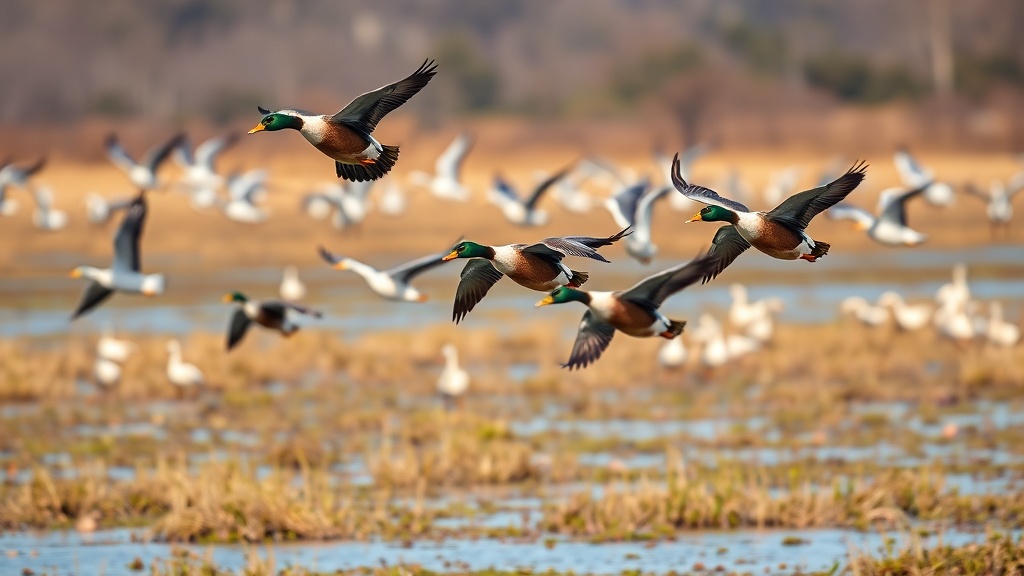
The most commonly hunted waterfowl species include Mallard, Wood Duck, Pintail, Teal, Canada Goose, Snow Goose.
Know your species. Identification matters for legal and ethical reasons. Some birds have daily limits or may be protected.
Flyways and Migration Zones
Migratory birds travel along four major flyways in North America:
- Pacific Flyway
- Central Flyway
- Mississippi Flyway
- Atlantic Flyway
Each flyway has unique migration timing, species, and regulations.
To view official flyway maps:
U.S. Fish & Wildlife – Flyway Maps
Waterfowl Identification Tips
| Species | Key Features | Bag Limit Notes (Varies) |
|---|---|---|
| Mallard (Drake) | Green head, white neck ring | 2–4 daily in many states |
| Wood Duck | Colorful plumage, red eyes | Often 2 daily |
| Blue-winged Teal | Blue wing patch, small fast flyer | Up to 6 daily |
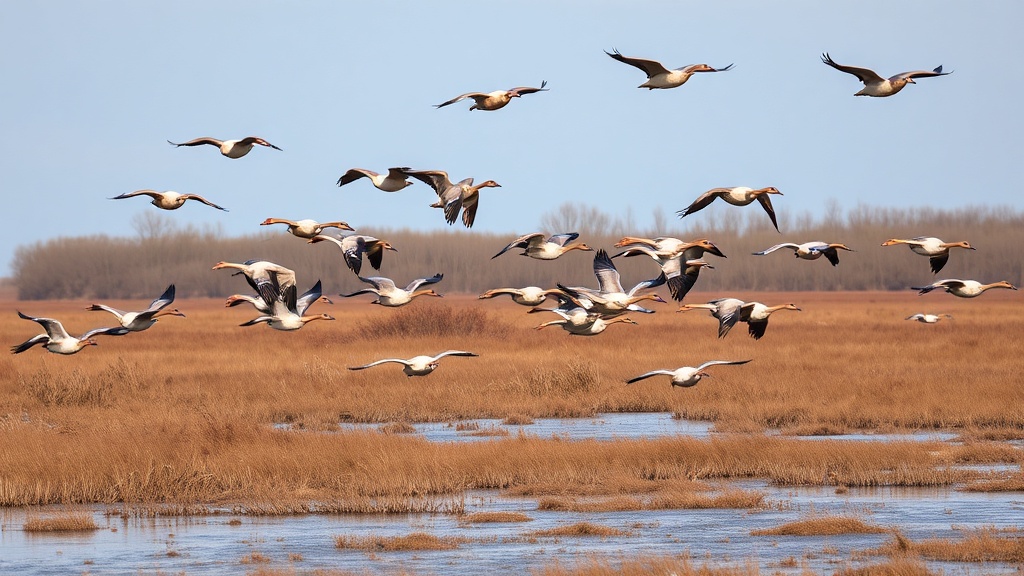
| Canada Goose | Black head, white chin strap | 1–5 depending on area |
| Snow Goose | White body, black wing tips | Often higher limits |
Misidentifying birds can lead to legal violations. Use ID guides and apps if you’re unsure.
Licensing & Legal Requirements
Before you hunt waterfowl, you’ll typically need:
- State hunting license
- Federal Duck Stamp (age 16+) 2
- HIP (Harvest Information Program) registration
- State-specific waterfowl permits or endorsements (if applicable)
These are federally regulated species. rules are strict. Check your local zone for details:
Check state-based regulations
Waterfowl Hunting Gear Checklist
Waterfowl hunting requires preparation and the right gear:
| Gear | Purpose | Notes |
|---|---|---|
| Shotgun (12 or 20 ga) | Waterfowl-legal gauge with non-toxic shot | Lead shot is illegal for waterfowl3 |
| Waders | Access flooded areas, stay dry | Chest-high preferred |
| Decoys | Lure ducks or geese | Match species and conditions |
| Calls | Mimic duck or goose sounds | See reviewed game calls |
| Camouflage | Hide from overhead birds | Face paint or masks help |
| Blind or cover | Concealment in marshes or fields | Portable or natural cover |
| Non-toxic ammo | Steel, bismuth, or tungsten | Must be labeled “nontoxic” |
Also bring a backpack, waterproof gloves, and extra dry socks.
See top hunting backpacks
Recommended Shot Sizes by Species
| Bird | Suggested Shot Size | Range |
|---|---|---|
| Teal | #6 or #7 steel | 15–30 yards |
| Mallard | #3 or #4 steel | 20–40 yards |
| Canada Goose | BB or #2 steel | 30–50 yards |
| Snow Goose | BB or #1 steel | 30–50 yards |
 Lighter shot works better at closer range but loses punch over distance. Pattern your shotgun before the season.
Morning Hunt Checklist
Waterfowl hunts start early. Don’t leave key gear behind in the dark.
Pre-Dawn Essentials:
- 🔲 Duck Stamp + Hunting License
- 🔲 HIP registration confirmation
- 🔲 Waders (check for leaks)
- 🔲 Headlamp with extra batteries
- 🔲 Shotgun and non-toxic ammo
- 🔲 Waterproof gloves and hat
- 🔲 Thermos, snacks, water
- 🔲 Phone with offline map
- 🔲 Zip ties or tags for birds
Effective Waterfowl Hunting Tactics
Scout Beforehand
Look for feeding fields, roosting areas, and flight corridors.Set Decoys Strategically
- Leave landing lanes open
- Match species and local numbers
- Add motion in still conditions
Call Responsibly
Start soft and don’t overdo it. Watch how birds respond.Stay Hidden
Birds see motion and shine from above. Use natural cover or layout blinds.
Common Mistakes to Avoid
- ❌ Using lead shot. it’s illegal and unsafe for waterfowl4
- ❌ Overcalling pressured birds
- ❌ Hunting the wrong flyway zone or outside shooting hours
- ❌ Crowding your decoy spread
- ❌ Forgetting to check the wind before setup
Avoid these mistakes and your success rate. and safety. will improve.
Waterfowl Season Snapshot: Texas
Here’s a 2024–25 Texas season example (zone-dependent):
| Waterfowl Type | Zone | Season Dates |
|---|---|---|
| Duck | High Plains | Oct 26–27 & Nov 1 – Jan 265 |
| Duck | North Zone | Nov 9–Dec 1 & Dec 7 – Jan 265 |
| Duck | South Zone | Nov 2–Dec 1 & Dec 14 – Jan 265 |
| Canada Goose | East | Sept 14–29 (Early Season)6 |
| Light Geese | East/West | Check TPWD regs7 |
Check out State Seasons
Habitat & Access Tips
Popular waterfowl access options include:
- Public WMAs (Wildlife Management Areas)
- National Wildlife Refuges (seasonal permits may apply)
- Walk-in hunting programs in states like Kansas and Texas
- Shoreline access on public rivers and lakes
Plan ahead and scout with apps.
See public land access
Explore walk-in hunting programs
Safety & Ethics
- Unload firearms before boats or crossings
- Never shoot low. dogs and hunters may be hidden in cover
- Retrieve every bird you shoot
- Tag birds correctly for transport
- Respect private land and posted signs
You’re representing hunters everywhere. do it right.
Final Tip
Start small. A dozen decoys, a basic call, and a well-scouted location can get you into the action. You don’t need fancy gear. just patience, practice, and a solid plan.
For beginners, also see:
First-Time Hunter Checklist
Hunting License Guide
Migratory Bird Treaty Act of 1918 – U.S. Fish & Wildlife Service ↩︎
Migratory Bird Hunting and Conservation Stamp Act – U.S. Fish & Wildlife Service ↩︎ ↩︎
Nontoxic Shot Regulations for Hunting Waterfowl – U.S. Fish & Wildlife Service ↩︎
Nontoxic Shot Regulations For Hunting Waterfowl and Coots in the U.S. ↩︎
Duck 2024‑2025 Seasons – Texas Parks & Wildlife Department ↩︎ ↩︎ ↩︎
Goose 2024‑2025 Seasons – Texas Parks & Wildlife Department ↩︎
Explore Related Topics:
Notice an update we should make?
We strive for accuracy. Contact us here if you see incorrect or outdated info on this page.