Colorado offers turkey hunters the chance to pursue two distinct subspecies across dramatically different landscapes. Adult toms typically weigh 11–24 lbs (toms), 5–12 lbs (hens), with Merriam’s birds tending toward the lighter end of the range. Merriam’s turkeys inhabit the ponderosa pine forests, oakbrush hillsides, and mountain meadows of the western and central parts of the state, while Rio Grande turkeys are found along the cottonwood-lined river bottoms and agricultural lands of the eastern plains. Colorado Parks and Wildlife (CPW) manages turkey populations through a tag system that provides access to both subspecies on extensive public and private land.
| Season Type | Opens | Closes | Notes |
|---|---|---|---|
| Spring | April 12, 2026 | May 25, 2026 | Gobblers and bearded turkeys only. Over-the-counter licenses available. Merriam's turkey. |
| Fall | September 1, 2025 | November 30, 2025 | Either-sex in most units. Dates vary by unit. |
Merriam’s turkeys are the primary draw for many hunters visiting Colorado. Known for their striking white-tipped tail feathers and lighter body coloration, Merriam’s are a mountain bird adapted to the ponderosa pine and Gambel oak habitats of the foothills and mesas. They are considered one of the more responsive subspecies to calling, making Colorado a popular destination for spring gobbler hunting.
Rio Grande turkeys on the eastern plains occupy habitat similar to their range in Texas and Kansas, favoring cottonwood river bottoms, shelterbelts, and agricultural fields. These birds can provide excellent hunting, particularly where they concentrate along waterways in the otherwise open grassland landscape.
Always verify current CPW regulations and tag availability before planning your hunt, as rules vary by unit and season.
Season Overview
Colorado offers spring and fall turkey seasons. The spring season typically opens in mid-April and runs through the end of May, covering the peak gobbling period. Spring hunting is restricted to bearded birds only.
 The fall season generally runs from September through November, with dates varying by unit. Fall hunting allows either-sex harvest in most units, giving hunters the option to take hens as well as gobblers.
Season dates can differ by game management unit, so it is important to check the specific unit where you plan to hunt. Some units may have limited or no fall season.
For current season dates, visit the Colorado hunting seasons page.
Licensing and Tags
Colorado turkey tags are available over the counter for most units during the spring season, making it one of the more accessible western states for turkey hunting. Hunters can purchase up to two spring turkey licenses statewide, subject to unit availability. Fall turkey licenses may also be available over the counter depending on the unit. Residents can expect to pay $36.08 for a resident hunting license, while nonresidents should budget for the higher $101.39 nonresident fee.
Both residents and nonresidents can purchase turkey licenses. Nonresidents pay a higher fee than residents. A valid Colorado hunting license (small game or combination) is required as a prerequisite to purchasing a turkey tag.
There is no draw or preference point system for turkey tags in most units, though some limited units may have restrictions. Tags can be purchased online through CPW’s licensing system.
For complete license details, see the Colorado hunting license guide.
Regulations Highlights
Key turkey hunting regulations in Colorado include:
 <strong>Season limit:</strong> 2
- Bag limits: The spring bag limit is typically one bearded turkey per license, with up to two licenses available. Fall bag limits allow one turkey of either sex per license.
- Legal weapons: Shotguns, muzzleloading shotguns, bows, crossbows, and handguns are legal for turkey hunting. Rifles are not legal for turkey in Colorado. Shotguns must use shot size no larger than #2.
- Hunting hours: Legal shooting hours are from one half hour before sunrise to sunset.
- Fluorescent orange: Not required for turkey hunting, though it is recommended when hunting during periods that overlap with other seasons.
- Reporting: Turkey harvest must be reported through CPW’s mandatory harvest reporting system. Carcass tags must be validated immediately upon harvest.
- Decoys and calls: Legal during both spring and fall seasons.
- Public land restrictions: Some units have specific access restrictions on certain public land parcels. Check unit-specific regulations.
Review the full regulations on the Colorado hunting regulations page.
Where to Hunt
Colorado’s extensive public land system provides excellent turkey hunting access. Top areas include:
- San Isabel National Forest – Ponderosa pine forests and Gambel oak hillsides on the eastern slope of the southern Rockies hold strong Merriam’s turkey populations. The foothills units along the Front Range are popular and accessible.
- Pike National Forest – Southwest of Denver, this forest offers Merriam’s turkey hunting in ponderosa pine and mixed conifer forests. The terrain is rugged but accessible from the Front Range cities.
- Comanche National Grassland – On the southeastern plains, this area holds Rio Grande turkeys along the Purgatoire River canyon and surrounding grasslands. The canyon breaks provide excellent roosting habitat.
- Rio Grande National Forest – In the San Luis Valley, this forest offers Merriam’s turkey hunting in mountain terrain with a mix of ponderosa pine, spruce-fir, and aspen.
- BLM lands along the Uncompahgre Plateau – Oakbrush and ponderosa pine habitats on the Western Slope support Merriam’s turkeys. These areas can be less pressured than national forest units closer to population centers.
CPW also manages State Trust Land and Walk-In Access properties that provide additional opportunities. For more on public land access, visit the Colorado hunting land page.
Tactics and Strategies
Turkey hunting tactics in Colorado depend on whether you are pursuing Merriam’s in the mountains or Rio Grande turkeys on the plains.
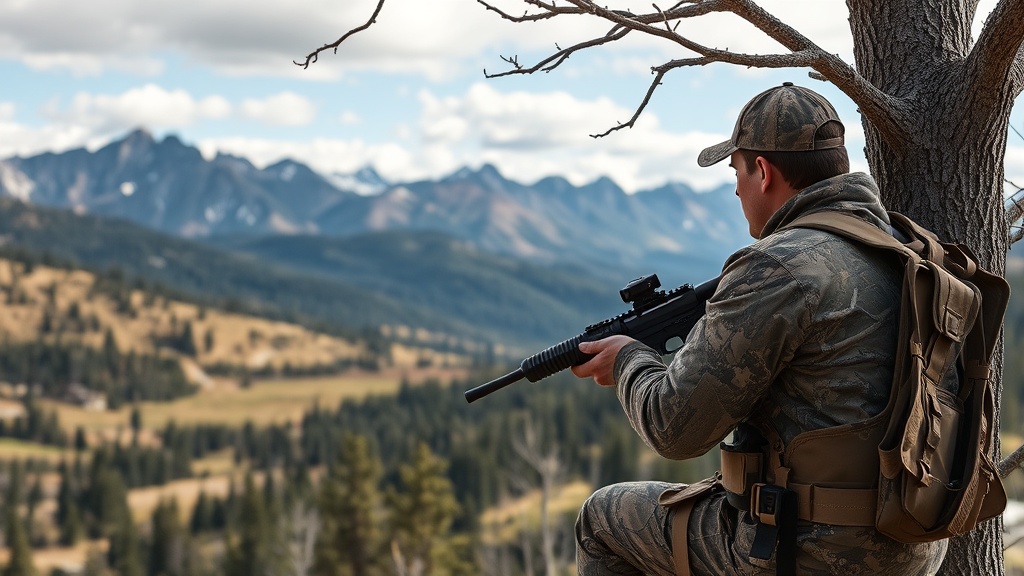 Merriam’s turkeys in mountain habitat:
- Locate roosts in ponderosa pine stands. Merriam’s turkeys prefer tall ponderosa pines for roosting. Scout the evening before by listening for fly-up calls and wing beats. Set up 100 to 150 yards from the roost tree on the downhill side, as turkeys typically fly down to lower ground.
- Hunt meadow edges and parks. After fly-down, Merriam’s turkeys move to open meadows, grassy parks, and forest openings to feed and strut. Setting up where timber meets open ground with a decoy in the clearing is a high-percentage approach.
- Be aggressive with calling. Merriam’s turkeys tend to respond well to assertive calling. Loud yelps, cuts, and excited hen sounds can trigger aggressive gobbles and bring birds in quickly, especially early in the spring season.
- Cover ground. Mountain turkey hunting can involve significant hiking between drainages and ridge systems. If a bird goes quiet or moves away, be willing to relocate and try a different area.
Rio Grande turkeys on the eastern plains:
- Focus on river corridors. Rio Grande turkeys roost in cottonwoods along rivers and creeks. Hunt the edges of these corridors where birds move from roost to feeding areas in adjacent fields.
- Use field setups with decoys. Open agricultural fields near roost corridors provide long sight lines. Set decoys in stubble fields or along fence lines where gobblers travel.
Elevation and weather can be factors in mountain hunts. Spring storms, cool mornings, and thin air above 7,000 feet require physical preparation and layered clothing.
Gear Considerations
Colorado turkey hunting spans a wide range of elevations and conditions. Spring mountain hunts can bring cold mornings near freezing with warm afternoons, while plains hunts may see wind and dust. Gear selection should be versatile.
Essential gear includes:
- A 12- or 20-gauge shotgun with a full or extra-full turkey choke and quality turkey loads
- Full camouflage suited to the hunting environment: woodland patterns for mountain timber, grassland patterns for plains
- Layered clothing including a warm base layer, insulating mid-layer, and a wind-resistant outer layer for cool mountain mornings
- Sturdy hiking boots with good ankle support for mountain terrain and uneven ground
- A turkey vest with a seat cushion and storage for calls, decoys, and gear
- A variety of calls: box call, slate call, and diaphragm calls
- Decoys, including a hen and optionally a jake for spring setups
- Binoculars for scanning meadows, parks, and field edges
- A daypack for carrying gear on longer mountain hikes
For gear recommendations, visit the gear hub and the game calls review.
Plan Your Hunt
Colorado offers accessible turkey tags and diverse hunting experiences across mountain and plains habitats. Use these resources to prepare:
- Turkey Hunting Guide – subspecies, calling strategies, and general tactics
- Colorado Location Hub – hunting opportunities in the Centennial State
- Scouting Basics – how to locate roost sites and feeding areas
- First-Time Hunter Checklist – essentials for planning your hunt
Explore Related Topics:
Notice an update we should make?
We strive for accuracy. Contact us here if you see incorrect or outdated info on this page.